 Rob Munday
When it comes to real-life horrors, it’s hard to imagine anything more devastating than the loss of a child. This grief has been at the heart of some of cinema’s most haunting feature films, and in Don’t Be Afraid, writer/director Mats Udd uses the mysterious disappearance of a man’s son as the starting point for a deeply unsettling short, exploring masculinity, mental health and the lasting effects of trauma.
Described by Udd as “a ghost story driven by psychological unease”, the inspiration for Don’t Be Afraid came from one of life’s most harrowing sources: real crimes. The initial idea took shape after the filmmaker encountered cases of missing people in which photographs had been left behind. Intrigued by the possibility that these images might reveal something about the circumstances of a disappearance, Udd began building his narrative around the idea of “photographs where something unsettling only reveals itself on a second look”. It’s a deceptively simple premise, but one that lends itself perfectly to horror, exploiting our instinct to search for meaning in images and the creeping suspicion that we might have overlooked something.
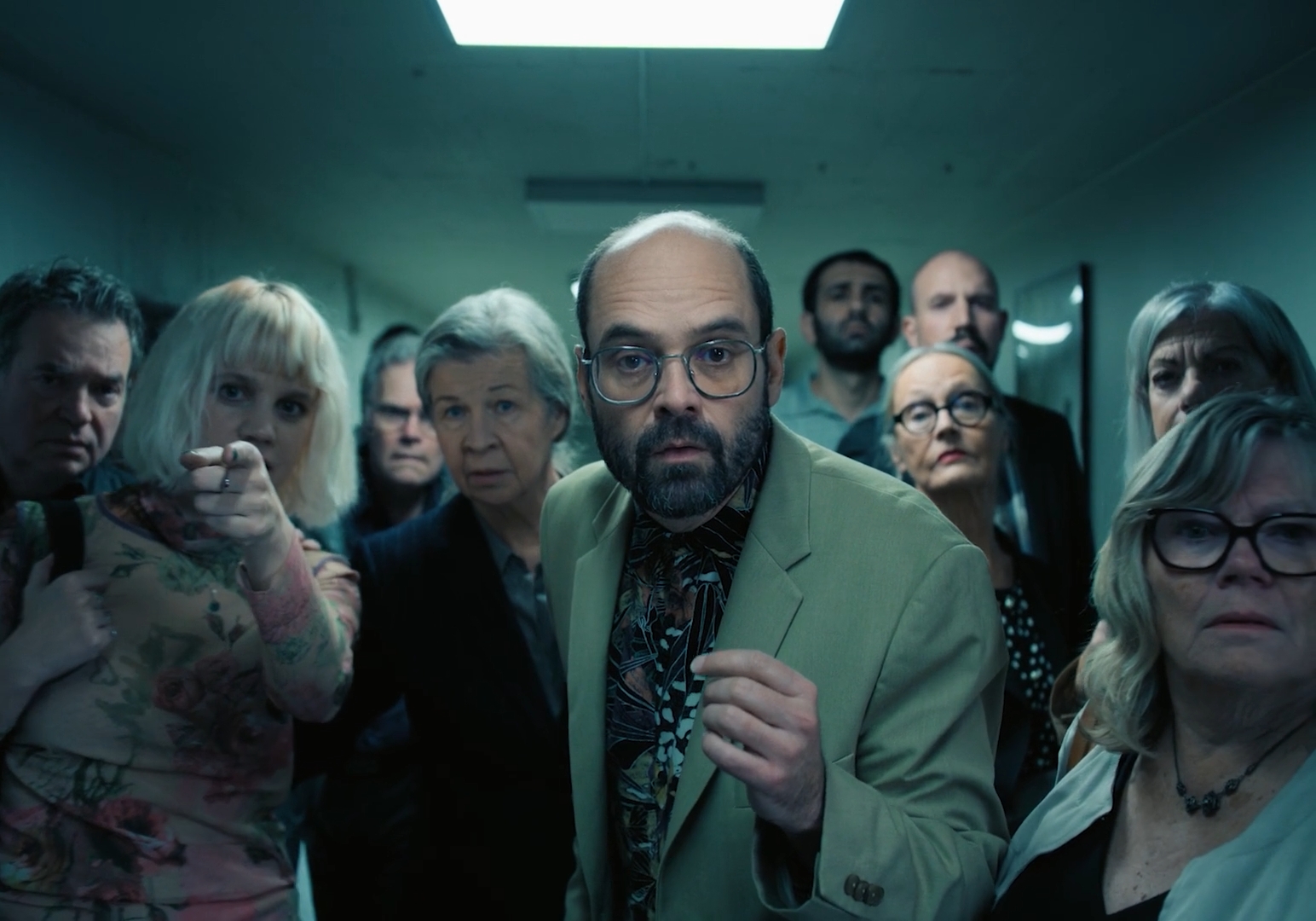
From this initial spark, Udd developed a story centred on Magnus, a photographer preparing for his comeback exhibition, and Pelle, his missing son. Following a brief opening in which we join Magnus in the woods on the night Pelle disappeared, the film jumps forward to the preparations for the exhibition. An uncomfortable interview provides some much-needed backstory, before an attendee at the launch notices something strange in one of the photographs and Magnus begins to unravel. Much of the dread that follows is psychological, as further details emerge about the night Pelle went missing and we begin to understand the guilt that has haunted Magnus in the years since. But just as we settle into the film’s carefully constructed atmosphere of uncertainty, Udd shifts the balance. When the tormented photographer returns to the site of his son’s disappearance, camera in hand, the possibility of something supernatural begins to feel considerably more tangible.
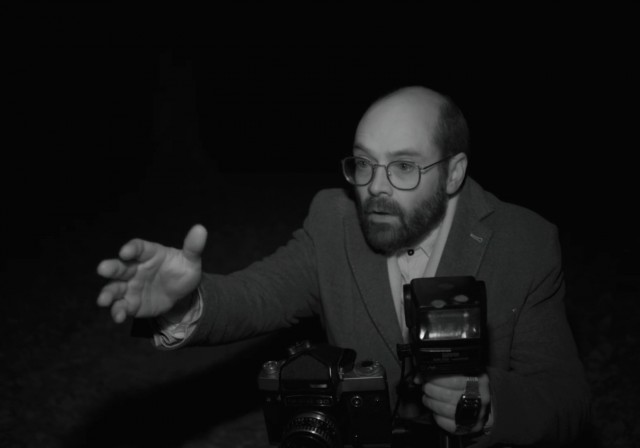
The infrared sequences lend the film’s conclusion an extra layer of creepiness.
“On the surface, it’s a haunting,” Udd explains, “but underneath, it deals with mental health, control, and something deeply traumatic that has happened, something that refuses to go away.” For the filmmaker, the “monster” at the heart of the story is less a concrete threat than a manifestation of internal and societal pressures. He describes the fear explored in the film as “something learned, inherited and imposed”, concluding that the horror lies not “only in the ghost”, but also in the “quiet, everyday pressure to become someone you are not”. This layered approach gives Don’t Be Afraid much of its unsettling power, allowing its supernatural elements to operate alongside a more intimate examination of the expectations placed on men and the damage caused by the inability to balance those expectations with a little emotional vulnerability.
For the film geeks among us, there’s plenty to admire in the craft, too. Udd describes casting David Dencik as a “dream” and there’s a fun piece of film trivia attached to the actor’s appearance: the glasses he wears were custom-made for his role as Bond villain Valdo Obruchev in No Time to Die. Equally impressive are the film’s eerie infrared sequences, which have their own cinematic lineage. Cinematographer Viktor Skogqvist tracked down a remodified RED camera previously used by Fredrik Wenzel for the night scenes in Ruben Östlund’s Triangle of Sadness. It’s the kind of detail that will delight cinephiles, but it also serves a clear creative purpose. Having Dencik navigate the darkness for real lends the scenes a greater sense of authenticity, while the infrared photography gives them an uncanny visual quality.
Winner of the Méliès d’Argent for Best European Fantastic Genre Short Film at SLASH Vienna in 2025 and the Méliès d’Or for Best European Fantastic Short Film at Sitges that same year, Don’t Be Afraid arrived in our submission queue with an impressive collection of accolades already to its name. We were pleased to discover that we shared the enthusiasm of those earlier juries. Kicking off our build-up to Halloween, Udd’s film makes for an ideal start to spooky season, combining the aesthetic confidence of a Hollywood feature with the emotional depth of an indie darling. It’s exactly the kind of ambitious, character-driven genre filmmaking we love to champion on Short of the Week.