 Céline Roustan
When locals tell you to stay home at night and there are nails sticking out of their front door… it’s probably a good idea to listen. Yet Vivi and her group of Western eco-volunteers don’t want to hear it. In Taga, writer/director Jill Marie Sachs crafts a satirical, engaging horror story that blends folk horror with a critique of Western liberal racism. Through Vivi’s quest for identity, Sachs turns her into a final girl in more ways than one.
“I never quite felt like I belonged anywhere”
Sachs revealed that the protagonist, Vivi, is based on her own experience: “as a mixed Filipino-American, I never quite felt like I belonged anywhere, especially in the small mountain town where I grew up”. This prompted a reflection on the sense of belonging and “where culture actually lives”, leading her to explore the spiritual side of her Filipino heritage: “the myths, beliefs, monsters and gods that have survived generations of change”.
With Taga, Sachs honours her culture by blending indigenous tales and folklore into the film’s horror, while using a satirical take on modern-day white tourism for its dark comedy – a form of tourism that “can sometimes unintentionally echo the colonial power dynamics of the past”. Taga is undeniably entertaining, but at its core is a quest for identity that grounds the film emotionally, making both its comedic and scarier moments all the more effective.
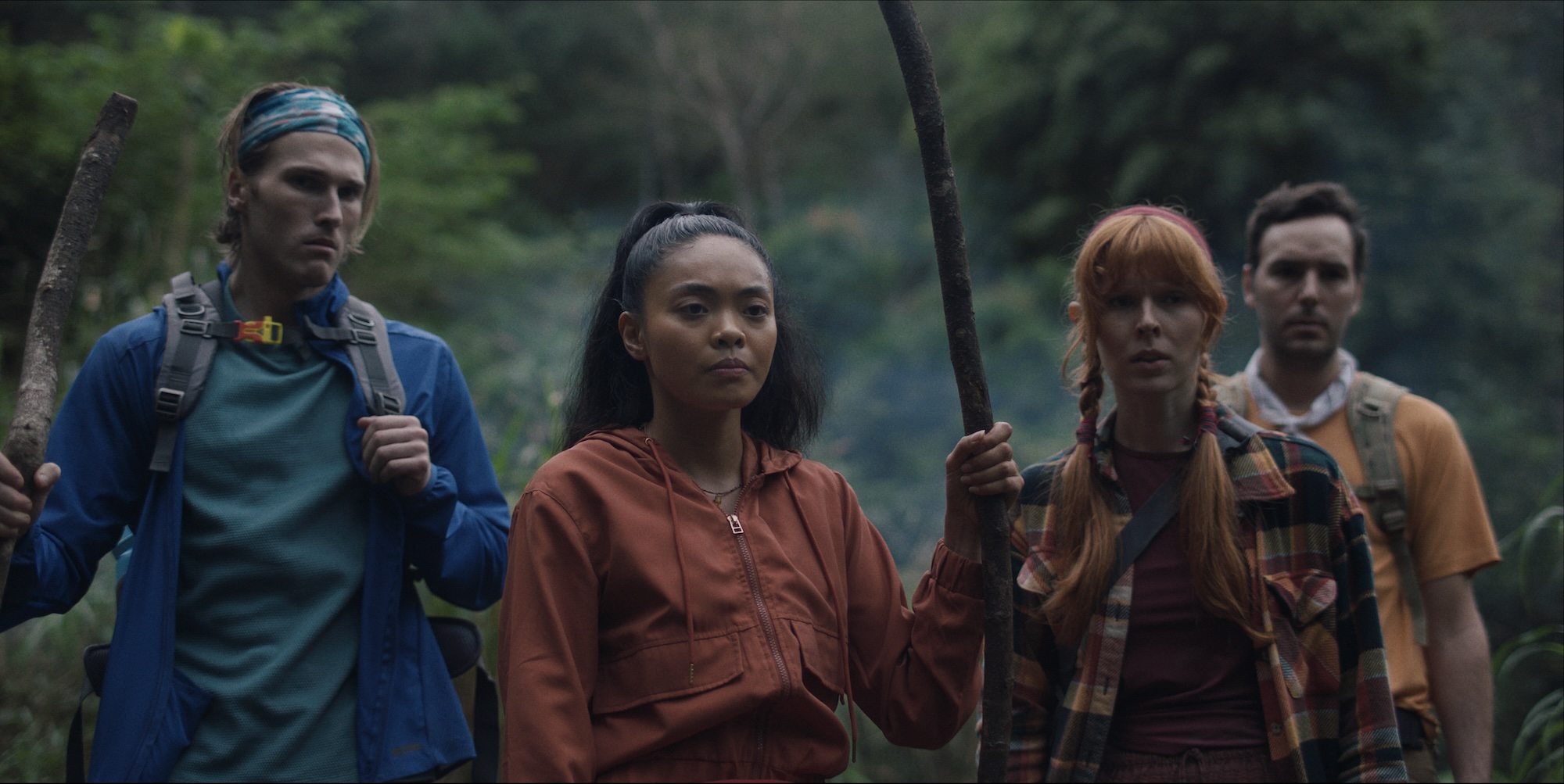
Lensed by DP Geia De Vera, the film’s cinematography transports us to the Cordillera mountains of the Philippines, where it was shot. “Whenever possible, we wanted the landscape, communities and physical environment to be part of the filmmaking rather than something we recreated elsewhere,” Sachs explained. The forest fills the frame so elegantly, at times amplifying the film’s comedic elements, but more often contributing to an unsettling atmosphere in which a threat always seems to be looming.
The film was edited by none other than S/W alum Joey Scoma (HAAW), who also plays one of the white tourists. He expertly strikes the right tonal balance through the film’s rhythm, giving the satire a satisfyingly sharp edge while building mounting tension and a pace that eventually feels like a horror roller coaster.
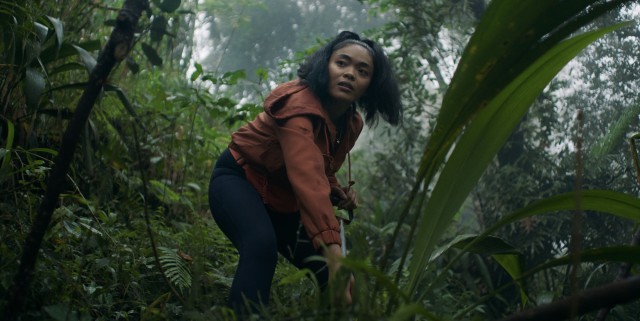
Kim Adis excels in the lead role in Taga
The ensemble is excellent at playing these Western eco-volunteers, making their self-indulgence and tone-deafness funny without overdoing it. Kim Adis, in the lead role, is given a meatier part, conveying the inner turmoil of Vivi’s quest for identity with real conviction before becoming the film’s final girl… or was she all along? As a monster movie, Taga also deserves praise for its creature design. Inspired by the Nangangatok, “a door-knocking entity from Filipino folklore”, the team brought the monster to life through practical makeup effects and performance, using digital effects only for wisps of smoke “to enhance rather than replace” what they had captured on set.
Ahead of its online debut, Taga played at multiple festivals, including Sundance in the Midnight section, as well as Leiden and Galway. Sachs’s new short, Marisol, premiered earlier this month as part of Tubi’s Bite Size Terror anthology. She is currently developing several feature-length projects, including a feature adaptation of Taga.