 Rob Munday
Growing up in a “traditional” household, as the younger of two brothers, there was a period of our childhood when it seemed almost as though our role in family life was to test our parents’ patience to its absolute limits. We weren’t the only source of tension, of course, but we were certainly the main instigators. Looking back, I suspect we possessed an almost instinctive understanding of exactly how far we could push things before someone finally snapped.
My mother, thankfully, was a remarkably calm soul. She rarely lost her temper and even when her frustration looked certain to erupt, she somehow managed to dampen it down rather than let it spill over. But there is one particular moment I still remember vividly: the rare occasion when she finally reached her limit. I can still picture the look in her eyes – not so much anger as exhaustion, the desperation in her face clear that she simply needed everything, and everyone, to stop, just for a second.
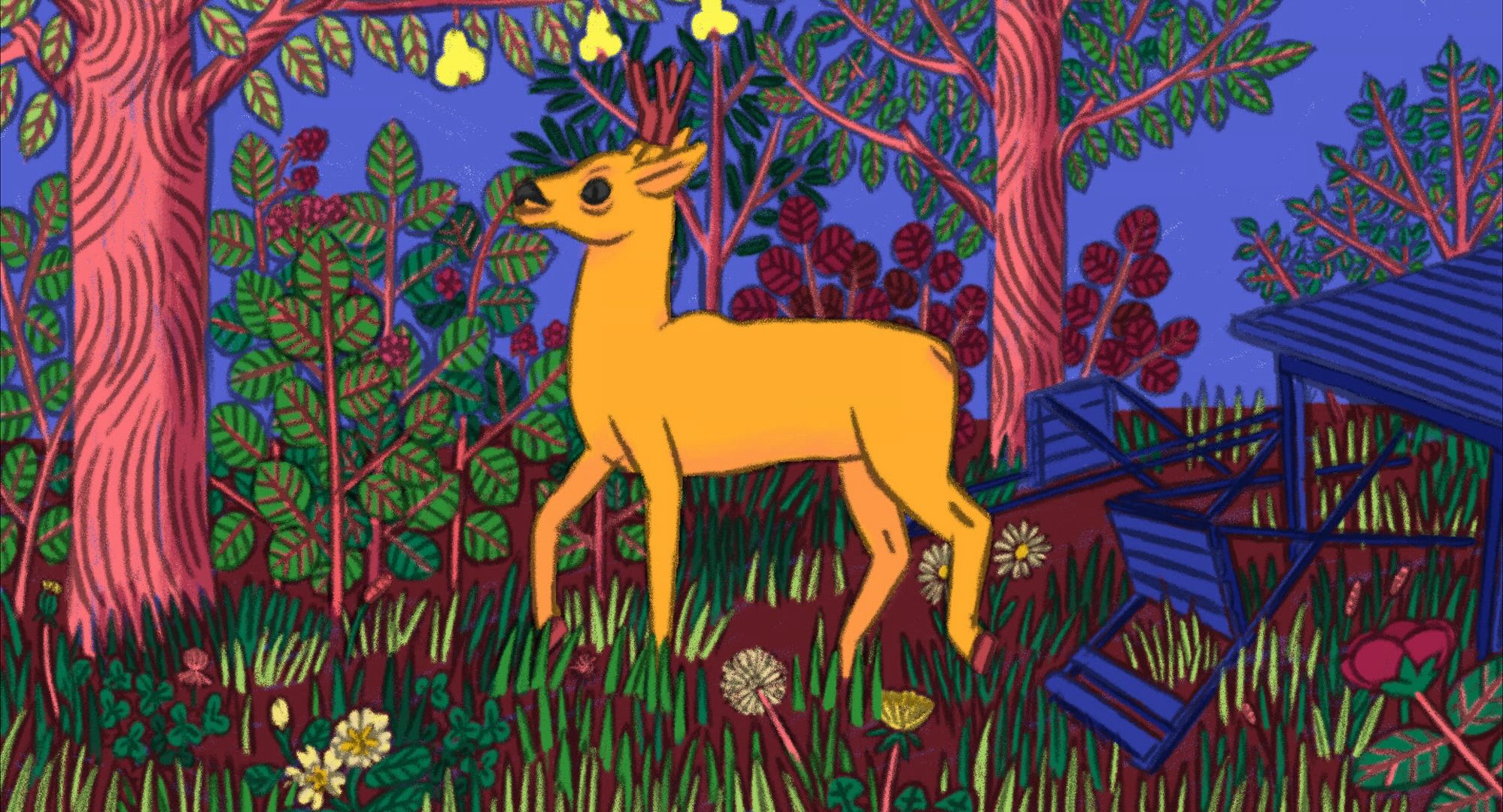
I found myself thinking about that moment while watching Delphine Priet-Mahéo’s animated short Le Chevreuil (The Roe Deer). Perhaps becoming a parent myself has made me more attuned to the specific contradictions of family life: the overwhelming love, the relentless noise, the small frustrations that accumulate throughout the day and that occasionally overwhelming desire to simply disappear somewhere quiet for five minutes.
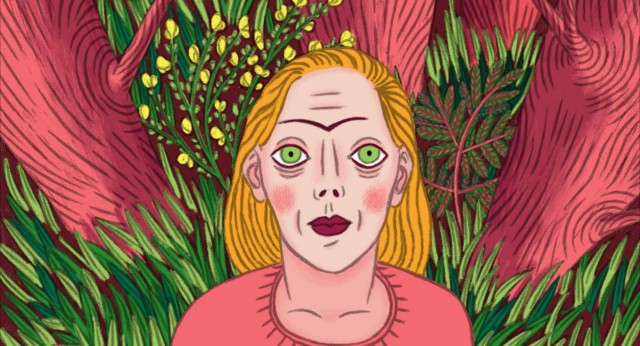
Delphine Priet-Mahéo’s animated short is based around a mother searching for some much needed peace in her hectic life.
Priet-Mahéo’s film captures all of the elements perfectly as it follows a mother who finds herself reaching that familiar point of exhaustion. Surrounded by the everyday chaos of family life, she snaps, escaping in search of something that has become increasingly elusive: a moment of peace. Into this domestic turmoil wanders the titular roe deer, a strange and almost magical apparition that seems to offer her a glimpse of another life.
The animal reminds her of the freedom of her younger years, of a time before the responsibilities of parenthood and the seemingly endless demands of family life. When she follows it into the woods, there is something wonderfully seductive about the possibility of simply leaving everything behind. Yet what initially feels like an escape becomes something much more challenging, as the introduction of hunters quickly makes her long for the security of family life.
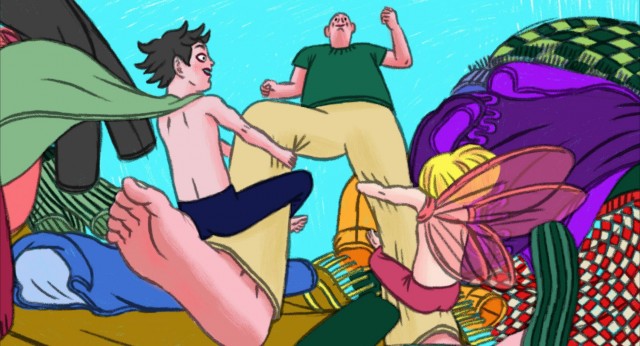
With their mother seeking solace in the woods, the two children in the film turn to their father for entertainment.
There is something quietly moving in that realisation. Family can be suffocating, but it can also be the thing that anchors us. The very relationships that test our patience are often the ones that make us feel most secure. Priet-Mahéo captures this contradiction through a film that continually shifts between the recognisable and the fantastical. At times Le Chevreuil feels grounded in the mundane realities of family life; at others, it slips into something closer to a fairy tale, with the roe deer becoming a mysterious guide – much like the White Rabbit from Lewis Carroll’s Alice in Wonderland, an inspiration for this film. That movement between worlds gives the film a dreamlike quality without ever allowing it to lose sight of the very ordinary emotions at its centre.
Ultimately, though, it’s the combination of immersive storytelling and Priet-Mahéo’s colourful aesthetic – at times reminiscent of an illustrated children’s book – that makes Le Chevreuil so affecting. Beneath its surreal imagery and fairy-tale logic is something wonderfully familiar: the complicated, often exhausting, but ultimately life-affirming experience of loving those who also drive you completely mad.