 Rob Munday
With Halloween still six weeks away, it might seem a little premature to turn our attention to horror. But with our Nightmare Shorts competition already underway – and a whole new crop of terrifying films currently making their way to us – I’m confident we’ll have plenty to share come the final week of October. In the meantime, I’m taking the opportunity to revisit one of my favourite horror shorts of recent years: Rodrigue Huart’s wonderfully inventive vampire film, Transylvanie.
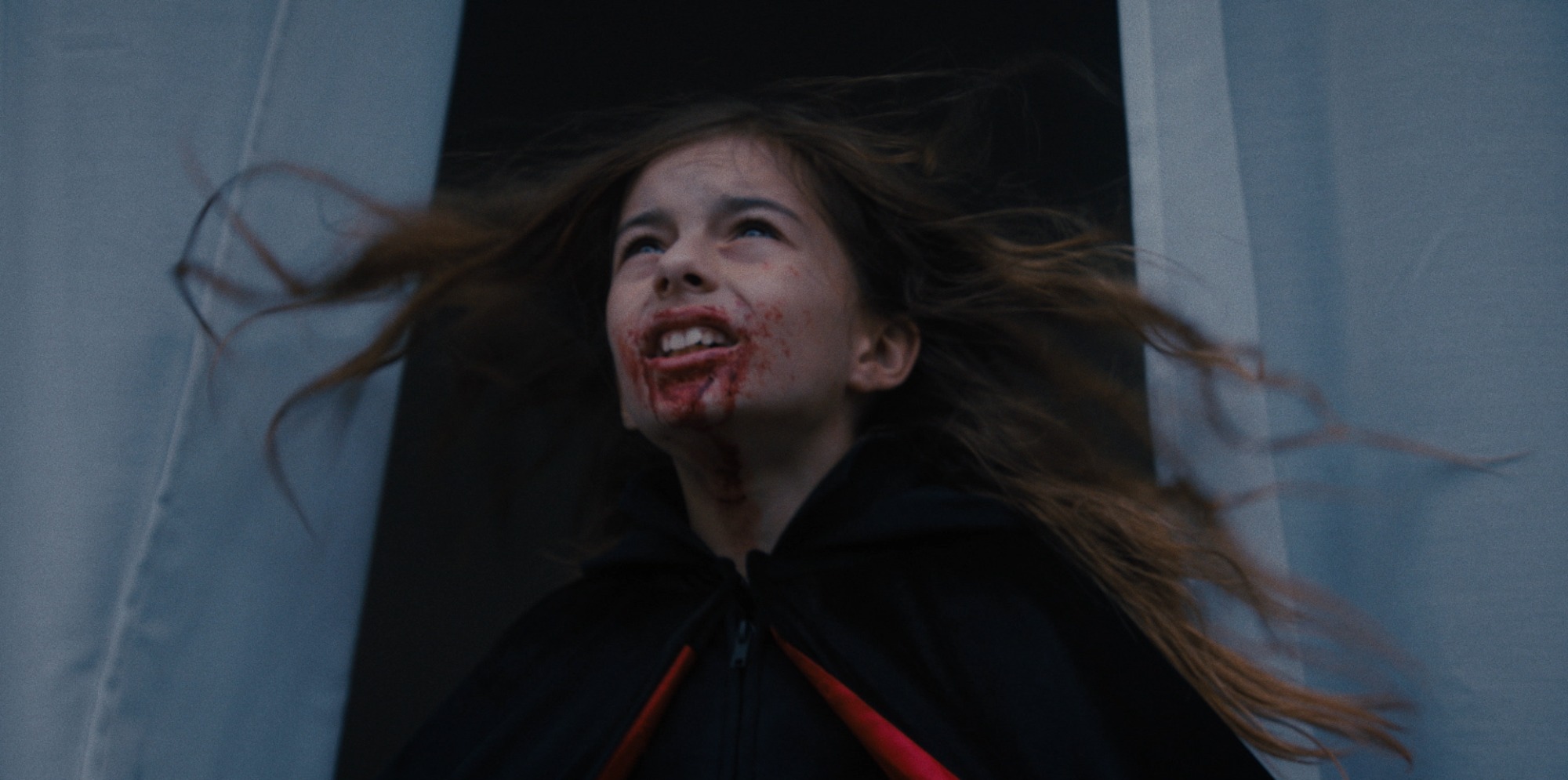
Set on an estate surrounded by high-rise buildings, Huart’s film opens with shots of the neighbourhood as we listen to the voice of a young girl, Ewa, speaking to her “Master” about her terrible loneliness and her desire to “finally transform someone”. While her words immediately evoke the familiar tropes of the vampire film, the setting and its protagonist certainly don’t. But this is only the beginning of Huart’s subversion of the genre, as for much of the film we’re left wondering whether we’re actually watching a vampire story at all, or simply a tale about a lonely girl with a vivid imagination.
Over its 15-minute runtime, Huart peppers the film with clues as to whether Ewa has truly been turned, as she claims. She tries to feast on the blood of a dead rat for sustenance, but doesn’t seem to enjoy the experience; she has an aversion to crucifixes (except in the graveyard!), yet walks freely in daylight. It’s never entirely clear whether Huart’s narrative – co-written by David A. Cassan and Axel Wursten – is reinventing the genre or simply messing with its audience’s expectations. Perhaps it’s a little of both. Either way, they’re determined to keep us guessing right up until the film’s unforgettable conclusion.
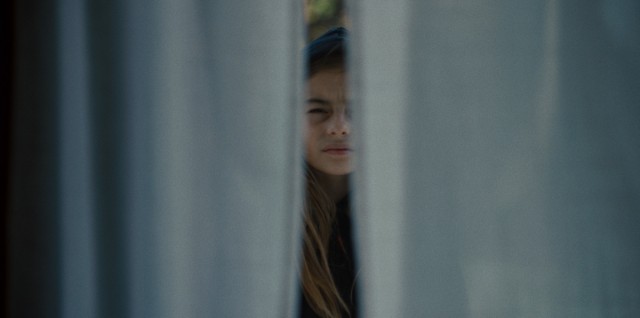
Katell Varvat puts in a stellar performance as Ewa in Transylvanie
Ultimately, though, Transylvanie thrives on Huart’s ability to translate this intriguing premise to the screen, with some truly stellar filmmaking on show. Julien Ramirez Hernan’s cinematography feels closer to social realism than traditional genre filmmaking, grounding the story in an instantly recognisable world, while the sound work of Alix Clément and Florent Simon, alongside the score by The Psychotic Monks, is crucial to the film’s steadily escalating tension. The performances from the young cast, particularly Katell Varvat as Ewa, are equally important to its grounded feel, while Marco Novoa’s edit is perfectly paced. In the end, though, Transylvanie is another example of why story remains key. All of these elements might have you purring over the quality of the filmmaking, but it’s the narrative – the unexpected story of a young girl desperate to be loved – that gives the film its real staying power.
Since making Transylvanie, which enjoyed an exceptional festival run and picked up awards at SXSW, BOGOSHORTS and elsewhere, Huart has made two further shorts: Trigger, the story of an ASMR artist whose livestream is hijacked, and Reel, about two peasants who discover a smartphone in a field in 1857. He’s also set to direct an upcoming film in The Conjuring Universe and has discussed returning to the character of Ewa in a feature film. This time, however, she’ll apparently be more obsessed with creepypastas than vampires. Given how effectively Huart plays with our expectations in Transylvanie, I’d be more than happy to see where he takes her next.