 Jason Sondhi
There are few prospects more terrifying to a stand-up comedian than bombing on stage. A nuclear bomb outside, however, probably qualifies.
That escalation is the deliciously high-concept premise behind NUKE, director Kelsea Bauman-Murphy and writer/star Alli Brown’s comedy about Molly, a struggling New York comic who claws her way into the lineup of the showcase she is convinced will change her life—just as everyone’s phones light up with an emergency alert warning of an incoming nuclear missile. With civilization potentially minutes from ending, the sensible response would be to flee, call your loved ones, make peace with your God. Molly would still really like to do her set.
NUKE arrives with deep roots in the comedy world. Brown is a veteran of New York’s UCB scene, while Bauman-Murphy bartended at a comedy club before spending years producing at Last Week Tonight with John Oliver. That familiarity translates, as the short authentically understands the ecosystem of aspiring comedians—the hierarchy, the competitiveness, and the desperation to succeed, without reducing them to caricatures.
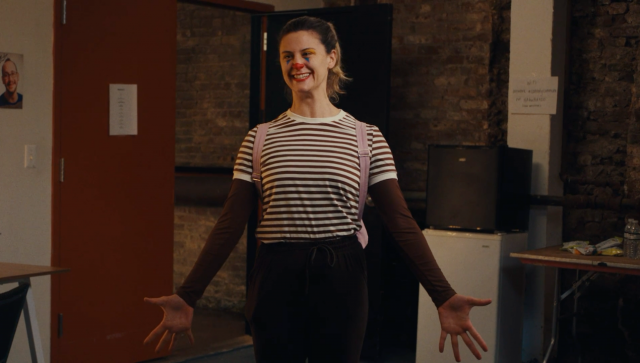
Alli Brown stars as struggling comedian Molly in NUKE
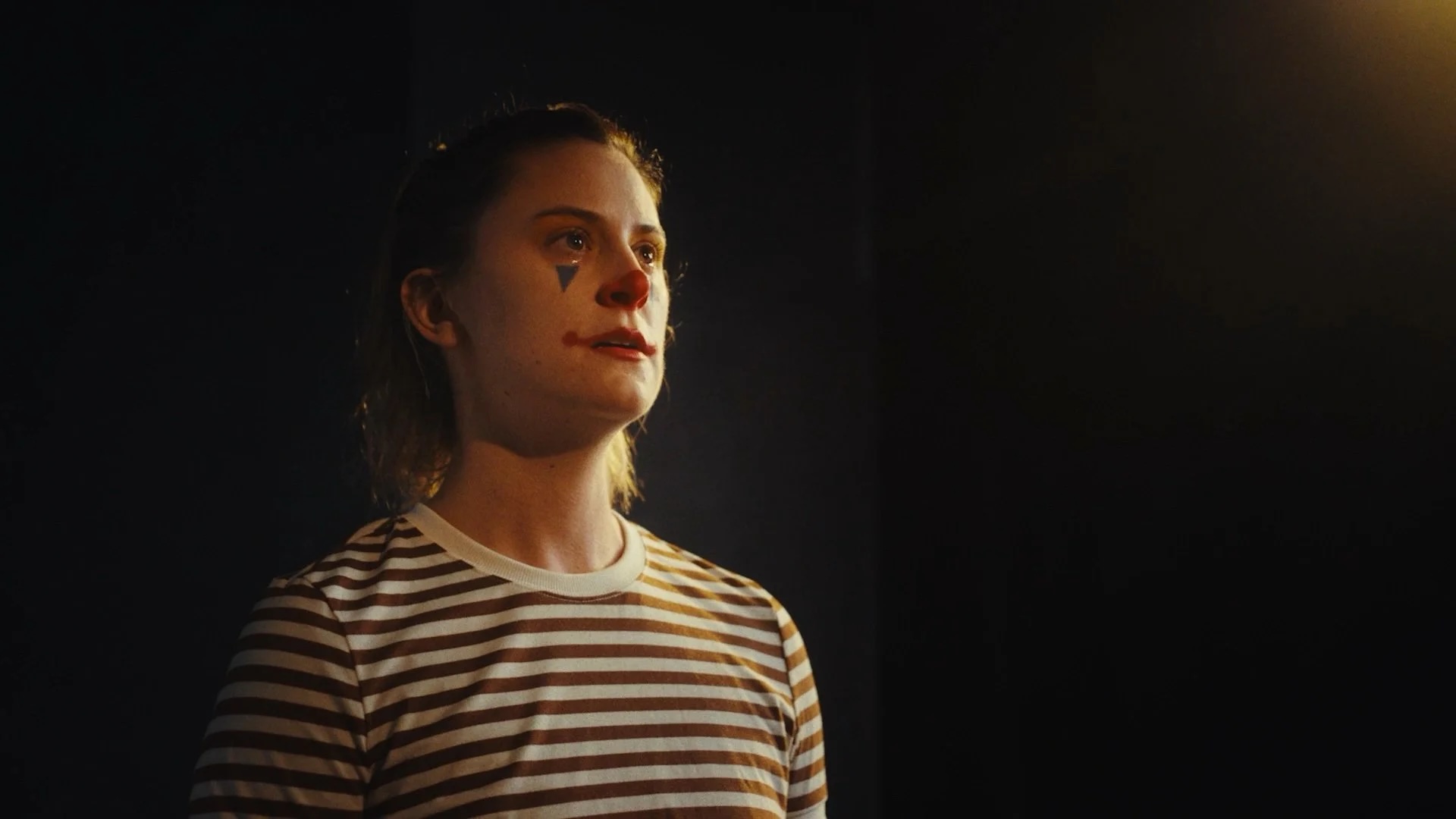
Molly, however, is something of a caricature! A clown comic in full costume, she is a familiar type of rabid scenester: always around, always hustling, and possessed of an unnerving conviction that success is just one opportunity away. Her deeply uncool schtick seems to vaguely discomfit her peers. The mismatch between their verdict on her prospects and the ferocity of Molly’s ambition gives NUKE much of its cringe. Nobody in the room wants it more, even if everyone else seems embarrassed to watch her try.
Brown drew the premise from her own pursuit of an invitation to audition for Just For Laughs. After years of trying, her invitation finally arrived in January 2020. Then COVID did. “The industry stopped, the world shut down, people were dying,” Brown recalls, “and for a minute there all I could think was ‘…but what about JFL?’” The experience forced Brown to contend with what she calls “that reptile part of my brain that’s toxically ambitious”—the part that had happily sacrificed dates, birthdays and family vacations if doing so might move her career forward.
That tension between ambition and toxic obsession is central to NUKE. The film doesn’t mock Molly for wanting something badly, but it doesn’t romanticize her pursuit either. Her ambition has transformed into something compulsive, narrowing her world until professional success becomes the measure by which everything else acquires value. A nuclear alert is the absurd extreme that finally throws those choices into relief, and what emerges is admirably poignant. Bauman-Murphy wanted to avoid using humor as “this sort of post-irony crutch that could pull us back from our earnest feelings,” and even if the turn from humor to existential drama is a familiar pivot in short film comedies, the emotions land with force, as the film refuses ironic distance from Molly’s genuine emotional crisis
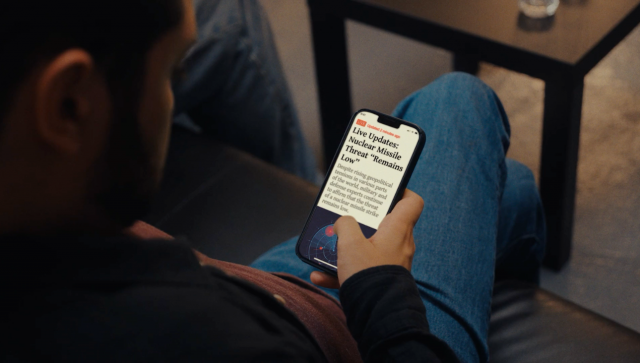
“Being at a comedy show while there’s a threat of a nuclear missile hitting the U.S. is completely ridiculous, but the personal journey for the characters in the room is grounded and realistic” – director Bauman-Murphy on her aims for the short
That tonal balancing act extends to Bauman-Murphy’s filmmaking. NUKE unfolds in real time with long takes and fluid Steadicam work carrying us through the club’s cramped corridors, stage and green room. Molly’s clown costume makes her stand out, but a killer supporting cast of familiar comedy faces, like Flatbush Misedemeanors’ Dan Perlman and The Daily Show’s Wyatt Cenac, flesh out the space and help instill a competitive dynamic. For the final green-room sequence, Bauman-Murphy even asked the cast to perform the entire short in a single master take. The live-performance backgrounds of Brown and her castmates show in the result, as their interplay during this crucial scene is vital to keeping the film grounded even as its premise goes spectacularly large.
This adherence to the messy humanity embedded within the concept is what ultimately sold me on NUKE. I spent its early going wondering whether this was merely a very good execution of a killer premise, but Bauman-Murphy and Brown do justice to the size of their concept without overwhelming the smaller, stranger movie inside it. Molly is a mess, but she is disarmingly recognizable to us in the creative industries, and, despite her ridiculousness, is deserving of love. NUKE doesn’t forget that, and the result is funny and uncomfortable, visually assured and unexpectedly affecting. What can I say, for a film about bombing, Murphy and Brown kill it.
The film had a small but excellently curated festival run, picking up a Special Jury Mention at Oak Cliff Film Festival and a Best Actress award for Brown at Nòt Film Fest, alongside selections at New/Next, Nitehawk, and Filmfort. We’re very pleased to share its online premiere with you today.