
 Céline Roustan
It’s a regular day at school for solitary Ina, until a new girl joins her class. Indifferent at first, that soon changes when she realizes that the girl is originally from the same country as her. Overtaken by a need for connection, will a shared language be enough? In her first short film, Ofrandā, writer/director Vjosana Shkurti crafts a layered coming-of-age story where identity is at the core of the narrative.
“The immigrant identity serves as a catalyst that unlocks the protagonist’s other identities: becoming a woman and discovering queer desire”
The premise of Ofrandā, like most coming-of-age stories, benefits from a universality that makes the narrative easily relatable. When we asked, Shkurti explained that the film is “inspired by the disorienting nature of early adolescence and the desire to seek human connection”. She added that, growing up as an immigrant, she “questioned whether a shared language/origin is a reason enough to be friends with someone, especially in times of isolation from the community I was familiar with”, which ultimately became the starting point for the film she penned.
What feels unique about the film is how Shkurti blends two layers of identity. The arrival of this new student triggers a new feeling in Ina, which ultimately combines a need for community – with someone who shares her cultural background – and the awakening of desire. Shkurti perfectly places her protagonist in between these two impulses, poignantly depicting the quintessential questioning of early teenage years. “The immigrant identity serves as a catalyst that unlocks the protagonist’s other identities: becoming a woman and discovering queer desire,” she added.
Shkurti subverts expectations in both her narrative and the way the dynamic between the two characters evolves. Without resorting to overly dramatic gimmicks, the film remains subtle and avoids manufacturing a contrived climax. Instead, it opts for a slice-of-life approach that is nonetheless deeply poignant.
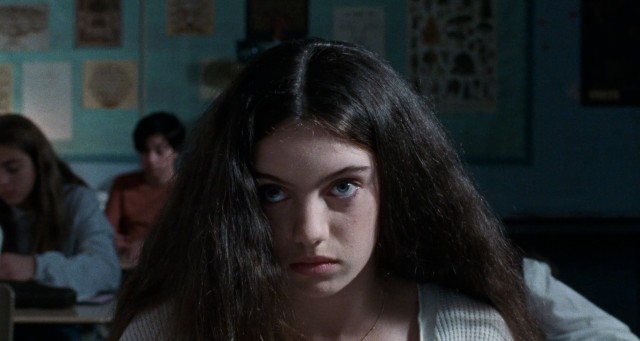
Kalyna Nichita excels in her performance as Ina in the film
The film is all about how Ina feels, and to convey these raw emotions, Shkurti and DP Léa Taillefer created a visual language that invites us into the way Ina perceives her surroundings and processes what is happening. The frame isolates her, allowing us to focus only on what she is paying attention to. Editor Elian Mikkola isn’t afraid to let us sit with Ina as she navigates her confusion and vulnerability. The film has a deeply sensorial approach,which makes Ina’s story sting even more effectively.
With minimal dialogue, the protagonist’s emotional journey is impressively portrayed by Kalyna Nichita, whom we watch navigate excitement followed by a level of rejection flawlessly. In her close-ups, the rawness of her performance is breathtaking, giving emotional weight to what might otherwise seem like a rather pedestrian moment. Her eyes and gestures navigate these confusing emotions with a striking authenticity that makes the film so engaging.
Ofrandā made its way around the festival circuit during the 23/24 season, with notable stops at Montreal’s FNC and Barcelona’s Mecal. Shkurti has since completed a new short film, Mother, My Child, which recently had its World Premiere at the 2026 edition of Fantasia.