
 Rob Munday
With stop-motion animation now well over a century old, it might seem hyperbolic to describe a short film released in 2023 as an instant classic. Yet Nina Gantz’s Wander to Wonder makes a compelling case for exactly that. Combining extraordinary craftsmanship with a timeless, deeply relatable story, the film has enjoyed a remarkable festival run, collecting an Annie Award, a BAFTA, a BIFA and countless other accolades. Watching it now, it’s difficult to imagine it becoming anything other than a landmark of contemporary stop-motion.
The story follows three miniature children’s television entertainers- Mary, Billybud and Fumbleton – as they struggle to find purpose after the god-like creator of their show dies. Over just 14-minutes, Gantz transforms this wonderfully eccentric premise into a darkly comic meditation on grief and loneliness. What makes Wander to Wonder so affecting is the precision with which it balances its opposing tones. The humour never undermines the emotional weight, nor does the melancholy overwhelm the film’s playful spirit. Instead, the two exist in constant conversation, making each feel more powerful because of the other.
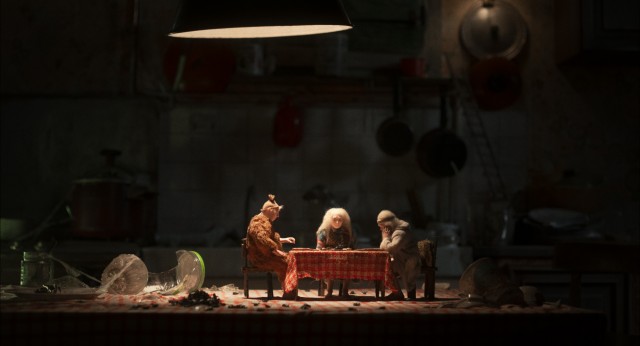
The trio of children’s entertainers face up to the bleak realities of life without their creator
Gantz credits the contrast between the “innocent and sweet kids TV show” the trio inhabit and the far bleaker reality behind the scenes as fundamental to the film’s success, explaining it was the “stark difference” between those worlds that promised “an intriguing conflict.” It’s easy to see why. Strip away the miniature sets and surreal imagery and Wander to Wonder becomes an existential reflection on bereavement and the different ways people attempt to navigate loss. Drawing on grief from her own life, Gantz imbues the film with an emotional honesty that quietly anchors even its strangest moments.
That emotional authenticity is matched by astonishing world-building. Every corner of this miniature universe feels thoughtfully considered, from the cocktail-shaker wash station to the precarious tower of VHS tapes leading towards a tiny window onto the outside world. Nothing exists simply as decoration; every prop contributes to the illusion that these characters have continued living long after the cameras stopped rolling. Gantz cites Ray Harryhausen and his pioneering combination of stop-motion and live action as a major influence, and that lineage is easy to recognise. I still remember the sense of wonder I felt discovering Harryhausen’s work in Jason and the Argonauts and the Sinbad films and Wander to Wonder rekindles that same feeling. There is something uniquely magical about stop-motion animation and few contemporary filmmakers demonstrate that better than Gantz.