
 Rob Munday
The loss of a loved one – whether sudden or prolonged – often leaves those left behind carrying unresolved questions and regrets. But what if you were given one final opportunity to speak with the dead? Would it offer the closure you’ve been searching for, or simply reopen old wounds? In Long’s Long Lost & Mini Mart, Julian Doan explores this very concept as he returns to the subject of grief following his unforgettable previous short film, Raspberry.
“I was inspired to try and structure the film to constantly resist closure for the audience”
The story of a grieving son who takes his late father’s remains to a convenience store in Little Saigon, hoping to bring him back for one last conversation, rather than offering catharsis, Doan’s short deliberately resists it. One of the filmmaker’s primary goals was to create an experience that would leave audiences “wanting and perhaps even dissatisfied.” As he explains: “Since the themes and story centered around disappointment, I was inspired to try and structure the film to constantly resist closure for the audience.”
That philosophy runs through the narrative. Although the anticipated reunion between father and son appears to be the emotional destination of the story, Doan pointedly refuses to show the conversation itself. Instead, just as the film seems poised to deliver answers, it shifts its attention to the store owner for its closing moments. In doing so, Long’s Long Lost & Mini Mart argues that grief rarely offers neat resolutions. Rather than providing closure, it presents two different responses to loss – the son’s desperate search for resolution and the store owner’s quieter acceptance of absence.
It’s a bold narrative decision and one that ensures the film lingers long after it ends. However, the short’s impact is equally rooted in Doan’s exceptional world-building. Every detail feels carefully considered. Discussing the film’s visual design, the director explained how the store was inspired by the “outdated and scrappy yet resourceful nature of refugee mom and pop shops and restaurants,” while production designer Mengqing Yuan used curtains to evoke a “series of portals” and the atmosphere of a “magic show.” The result is a space that feels simultaneously ordinary and enchanted, suspended somewhere between reality and myth.
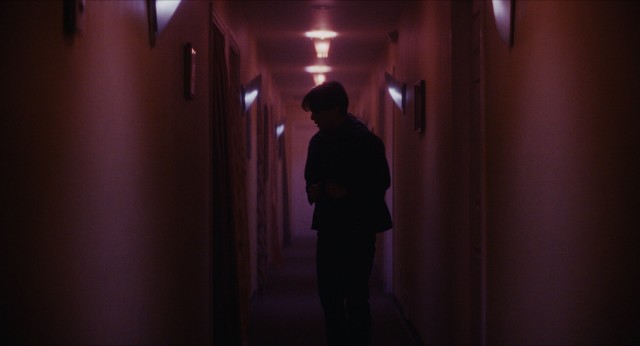
“We found a perfect “Scooby Doo” looking hallway, tons of rooms implying a revolving door of customers and that felt completely foreign to a convenience store.”
The film’s locations further strengthen this sense of unease and possibility, particularly the seemingly endless corridor of doors that feels as though it could lead anywhere – or nowhere. Combined with excellent performances from the cast, these elements give the film a distinctive identity. Yet it is ultimately the cinematography that brings everything together. Doan and cinematographer Jay Swuen drew inspiration from a wide range of Asian filmmakers, including Kiyoshi Kurosawa, Diao Yinan, Tsai Ming-liang, Apichatpong Weerasethakul, and Wong Kar Wai. Despite these influences, the imagery never feels derivative. Instead, the photography consistently finds inventive and unexpected ways to transform the familiar into something magical, imbuing the film with an atmosphere that is both dreamlike and emotionally resonant.
Following an impressive festival run – which saw the film play Tribeca, earn nominations at FilmQuest, win both the Grand Jury Prize and Audience Award at Nitehawk Shorts, and, just hours before its release on Short of the Week, take home the Best Narrative Short award at the 2026 Ouray International Film Festival – we’re delighted to welcome Doan back to Short of the Week. Long’s Long Lost & Mini Mart builds confidently upon the strengths of Raspberry. While the two films share thematic concerns, this latest work feels like a significant step forward, further showcasing Doan’s distinctive voice and leaving us eager to see where his filmmaking journey leads next.