
 Serafima Serafimova
Mornings from my early childhood still come back to me occasionally: sunlight coming through the mosquito-netted kitchen window, my grandma sitting at the small table with a cigarette burning down between her fingers, and her special deck of cards spread out as she read what our futures had in store. It was our little ritual, existing in that magical hour before everyone else got up and ordinary life resumed. As a child, I never realised how precious those moments were, or how much I would one day long for that familiar smell of coffee mixed with cigarette smoke. Watching And Granny Would Dance, I found myself back in that kitchen again. And if you too were lucky enough to spend your childhood listening to aunts, grandmothers and family friends sharing stories, gossip and laughter, Maryam Mohajer’s tender short will likely awaken memories of your own.
Based on Mohajer’s childhood memories of growing up in Iran, And Granny Would Dance is another gem from the BAFTA-winning animator, whose 2019 short Grandad Was a Romantic charmed audiences with its warmth, humour and emotional honesty. Those same qualities are present here too, though this feels like a more ambitious work, both in its storytelling and design. Built from hand-drawn sketches, the 2D animation possesses the hazy quality of a memory recalled decades later – specific enough to feel authentic, but universal enough to become our own. It is a deceptively simple piece of filmmaking, the sort that wears its craft lightly while making something very difficult look easy.
“One of the things that is hardly represented about Iranian culture is the humour”
The film follows six-year-old Marmar, who spends much of her time doing what children have done for generations: sitting quietly in the corner while the grown-ups talk. As her grandmother and a group of her friends gather around the kitchen table for an illicit game of cards, Marmar listens to their stories, slowly piecing together an understanding of the incredible women around her. At the same time, she is trying to solve a mystery of her own. Her granny, once known for dancing at every opportunity, hasn’t danced since the death of her husband. Through a child’s curious eyes, Mohajer weaves together a touching story about love, loss and the friendships that help us weather both.
What makes And Granny Would Dance so affecting is not just the story it tells, but its portrayal of a side of Iranian culture that is rarely seen on screen. As Mohajer told S/W, “During wars, revolution and hard times, our humour has always been kept alive and maybe even has helped us survive. The humour from women especially hasn’t had much attention from most filmmakers, whereas it’s the core of every conversation or gathering between any group of Iranian women. It is audacious, playful, reassuring and in some ways liberating.”
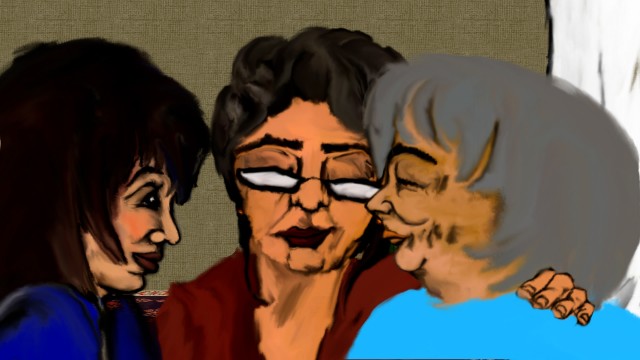
“Put a group of Iranian women – or any group of women – in a room, and help them to feel safe and relaxed, and something happens instantly. It can be magical.” – director, Maryam Mohajer
That spirit runs through every frame of the film. While it touches on grief and the lasting impact of loss, Mohajer never allows the story to become weighed down by sorrow. Instead, she celebrates the wit, resilience, and camaraderie of these women, revealing how laughter can become both a form of resistance and a source of comfort. In doing so, And Granny Would Dance offers a portrait of Iranian life that feels refreshingly intimate, vibrant, and deeply human.
At the same time, the director is also pushing back against the narrow ways Iranians are often portrayed on screen. As Mohajer explained, “I want to help my audience see Iranians not as terrorists or victims but as people who’d fall in love – just like everyone else – who’d mourn the loss of a loved one – just like everyone else – who’d crack a cheeky joke when amongst friends – just like everyone else.”
And while And Granny Would Dance is very much rooted in Iranian life and traditions, its emotional pull is wonderfully universal. Anyone who remembers hovering at the edge of grown-up conversations, fascinated by stories they only half understood, will likely find themselves somewhere within Marmar’s world. That may well explain the film’s success on the festival circuit. Following its world premiere at Palm Springs International ShortFest in 2024, it picked up the festival’s Audience Award for Best Animated Short and has since continued its impressive run, winning honours at Aesthetica, Manchester Animation Festival and the London International Animation Festival, among others.
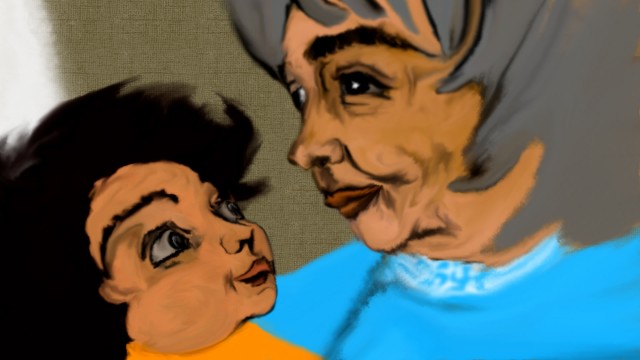
Maryam began making And Granny Would Dance with observational drawings before scanning them in and then working on them digitally.
Visually, Mohajer’s animation is not interested in showing off. It lacks the polished hyper-fluidity often associated with contemporary animation. But that’s also where much of its magic lies for me. Her hand-crafted visual world feels lived in: the patterns, textures and clutter of domestic life arranged with the care of someone reconstructing a treasured place from childhood. The film’s greatest trick is that by the end, these spaces feel strangely familiar, even if you’ve never set foot in Iran.
What And Granny Would Dance conveys so beautifully is that our fondest memories are rarely dramatic. Instead they are usually rooted in friendships that survive decades, the humour that persists through hardship, the stories told and retold until they become part of a shared history. Mohajer treats these moments with tenderness, finding drama not in grand events but in the bonds that sustain everyday life. The result is a loving tribute to the people who keep families, memories and entire communities alive.