
 Céline Roustan
Tati works at a high-end clothing store with a snarky boss, but she needs the job. One day, a childhood friend walks into the boutique and disrupts the fragile balance Tati has built for herself. With Rainbow Girls, writer-director Nana Duffuor crafts a tale of resistance against gentrification and systemic inequality, infusing it with infectious energy through three empowering characters.
“From the first time I heard of the Rainbow Girls, I was fascinated”, Duffuor quickly confessed. As the film establishes early through its title card, the story is indeed based on real events. Duffuor explains that the title refers to “a loose band of Black trans and cisgender women in their late teens and early twenties, who launched a string of robberies targeting San Francisco’s most exclusive luxury brand stores in 2013″.
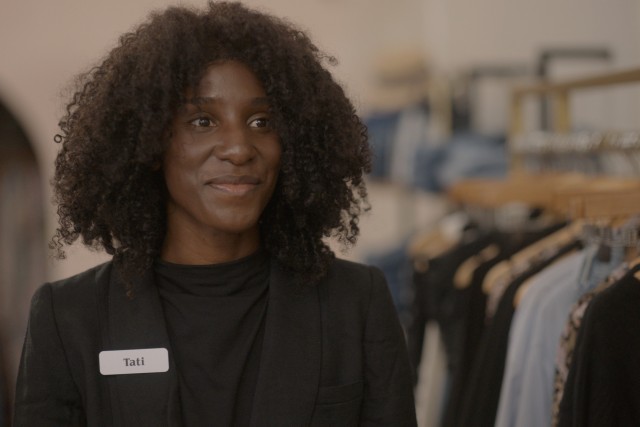
Jai Stephenson as Tati in Rainbow Girls
Having witnessed first-hand the gentrification driven by the Bay Area tech boom, Duffuor also recalled a friend working in retail who shared that employees were “being trained to deal with groups of young women swarming high-end stores”. From that premise, she created three characters with distinct backstories, allowing Rainbow Girls to bring multiple perspectives to both the heist layer of the narrative and its broader depth.
That heist aspect of the film, along with Duffuor’s decision to begin at the end, gives the structure an engaging quality as we follow Tati’s journey. She is an easy character to root for, and the film quickly invests us in her success – an element of the film the writer/director needs to take great credit for. In general, the way Duffuor has built all her characters makes the film all the more entertaining, as every character (even the supporting ones) feels grounded and shaped by compelling backstories. No-one here is reduced to caricature and through this ensemble Duffuor paints a vivid picture of San Francisco and of Tati’s world.
While the heist provides much of the film’s energy and pleasure, Duffuor also uses the narrative to explore inequalities of wealth and privilege. She infuses her screenplay with perfectly-timed micro-aggressions that gradually push Tati toward transgression. And while watching the Rainbow Girls unapologetically fight against the system is empowering, the film also has a very effective emotional layer. The sense of sisterhood Duffuor depicts, and how communities have to stand together to survive is unexpectedly quite poignant. Her reflection on how San Francisco has changed is handled with subtlety, yet remains undeniable.

Nava Mau as Giulia (the Store Manager) in Rainbow Girls
We’re big fans of Nava Mau (All the Words but One) at S/W, and she is perfect in Rainbow Girls in a somewhat antagonistic role. But it’s the chemistry between Jai Stephenson, Sis Thee Doll and Céline Jackson that makes the film so resonant – from sense the sisterhood to the way their different personalities complete one another. Stephenson is especially compelling in the role of Tati, bringing both vulnerability and resolve to her performance.
Rainbow Girls is having its Online Premiere on S/W today after a successful festival run including selections at BFI Flare and Urbanworld, winning awards at NewFest and New Orleans. A feature adaptation of the short is currently in development.