
 Céline Roustan
Just a year ago, in our Sundance coverage, I described this as “one of the most promising shorts of the new year,” which makes us all the more excited to present the online debut of S/W alum Daisy Friedman’s (As You Are) Unholy. In the film, Friedman explores themes of loneliness and disconnection within a familiar setting, following her protagonist Noa, who feels deeply misunderstood at her family’s Passover Seder.
“Growing up, I never saw any representation of people whose stories and bodies looked like mine on screen”
Friedman shared with us that the film is loosely inspired by her own health journey and her experience growing up in a traditional Jewish family. She explained that she was “interested in the idea of the connection between food and love in Judaism and in culture, and what you miss out on when you can’t have that”. Through the specificity of her protagonist’s experience, the film touches on a surprisingly universal feeling: “how painful it can feel when tradition seems to demand a version of you that isn’t real or sustainable”. At its core, Unholy is an exploration of self and how to reconcile traditions with identity. It’s also about finding the agency and support to do this.
While chaotic family dinners are often familiar and compelling on-screen, it is hardly an original set-up. However, Friedman refreshes the trope by presenting it through the perspective of a main character with a disability. “Growing up, I never saw any representation of people whose stories and bodies looked like mine on screen”, Friedman confessed. While the representation adds a certain depth to the narrative, Friedman cleverly builds a poignant narrative around it, depicting the feeling of being an outsider in the one place where you should feel like you belong.
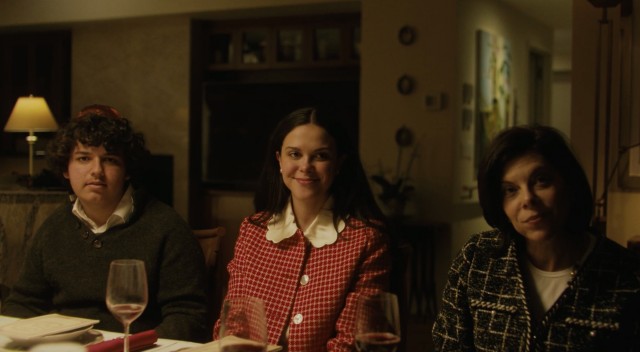
“I wanted to show that tradition doesn’t have to be something you either fully uphold or entirely abandon” – Friedman discussing her aims for her film.
Over the course of the film, we follow Noa as she navigates this social situation: from the intrusive dinner-table comments to the family expectations. All of which put pressure on Noa, forcing her to question her connection to both her identity and her traditions. The film takes us on her emotional journey as she processes her condition and how it reshapes her place in her world, ultimately reclaiming her own narrative and ending the film on such a powerful and satisfying note.
With DP Kevin Yu (who also shot previous S/W picks Nun’s Beach, Breadwinner and Accident) and editor Kylie Murphy (who again worked on Breadwinner), Friedman fully immerses us in Noa’s perspective. We feel the frantic, chaotic energy of the Seder and how it affects her, and the contrast with the final scene makes her journey all the more effective. Olivia Nikkanen – already featured on S/W in Blake Rice’s Tea – delivers a standout performance as Noa. Her portrayal is subtle and layered, yet truly powerful in how it conveys the nuances of what her character goes through at that dinner.
Ahead of its online premiere, Unholy had its world premiere at Sundance 2025 and went on to screen at multiple festivals including SXSW, Aspen’s Shortsfest and the Palm Springs ShortFest.