 Short of the Week
With filmmakers such as The Daniels and Gints Zilbalodis receiving Academy Awards in the Feature categories in recent years, interest in the Oscars from the short film community has grown significantly. These filmmakers have exemplified a path from indie short filmmaking to critically acclaimed feature work, and this year we again turn our attention to the awards, on Sunday, March 15th, hoping to see more short film alumni – perhaps S/W alums like Geeta Gandbhir or Elizabeth Lo – making their mark at the year’s most prestigious film ceremony.
However, our primary focus remains on the three short film categories. As part of our annual Oscars coverage, we have prepared this guide, adopting the perspective of a voter to highlight the shorts we would select for advancement to the next stage – the nominations.
View all 45 shortlisted films on Shortverse
The voting period begins on Monday January 12th and runs until the following Friday, January 16th. After this window closes, the initial 45-film shortlists will be narrowed to 15 – five in each category: Best Animated Short Film, Best Documentary Short Film, and Best Live-Action Short Film. S/W’s 15-picks – five in each category – have been selected by our Senior Programmers: Rob Munday, Céline Roustan, and Jason Sondhi. Their choices can be explored in full below:
***
The Academy Award for Best Animated Short Film
The race for the Best Animated Short Film Oscar has arguably been the most interesting to follow of the three categories over the past few years. We can now say with confidence that the evolution of the Academy’s rules has truly benefited the category – not only resulting in stellar work on the shortlist, but also allowing films from independent productions to break through, giving emerging talent a platform to shine.
Of the three shortlists, animation was also the one with the most films we were already familiar with, as professional short-film watchers. We were happy to see shorts that have traveled to many festivals make the cut, forming a shortlist of 15-films that are narratively, tonally, and visually very different, showcasing the wide range of the animation format.
Last year, In the Shadow of the Cypress won the Oscar in a race filled with excellent nominated films. We’ll see who takes home the award this year – fingers crossed for one of these five films. – Céline Roustan
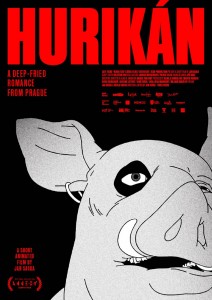 | Hurikán by Jan Saska If you’ve been to a festival during the 2024/2025 season, you’ve most likely seen Hurikán! From Sundance, SXSW, Melbourne, and Sitges to Clermont-Ferrand, Leeds, Palm Springs ShortFest, Zinebi, and Aguilar – to name just a few – the film has been everywhere. It also won the 2024 Audience Award in Annecy. This black-and-white 2D animation is FUN! PUNK! Featuring a pig-headed titular character roaming the streets of Prague in search of a keg of beer to impress the girl he has a crush on… adventures ensue. |
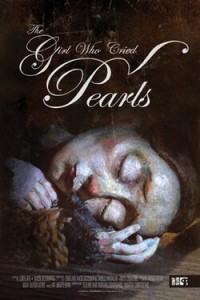 | La Jeune fille qui pleurait des perles (The Girl Who Cried Pearls) by Chris Lavis & Maciek Szczerbowski The directing duo was previously nominated at the 2008 Academy Awards with Madame Tutli-Putli. It was actually while shooting that film that they found the inspiration for The Girl Who Cried Pearls. Produced by Canadian powerhouse NFB, the duo once again uses stop-motion animation and handmade puppets to craft an effective parable about love and money. The film premiered in Annecy and went on to win the Best Canadian Short Award at TIFF. |
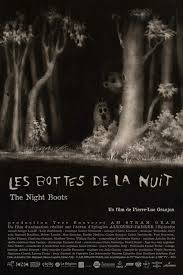 | Les Bottes de la nuit (The Night Boots) by Pierre-Luc Granjon It’s not every day you see pinscreen animation! With The Night Boots Granjon uses the traditional animation technique to craft the engrossing universe of his fable-like story. While the narrative structure can be somewhat predictable, it still conveys remarkable emotional depth that will move both children and adults alike. Winner of three awards at the 2025 Annecy – including the prestigious Cristal Award and the Audience Award – the film continues its festival run, with notable stops at Ottawa, Sitges, and Winterthur. |
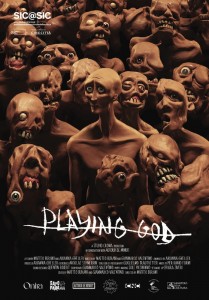 | Playing God by Matteo Burani Calling this Italian-French coproduction (Autour de Minuit) visceral would be an understatement. Burani uses stop-motion to manipulate clay sculptures, allowing the audience, alongside the protagonist, to feel like they’re playing God. The film’s pacing amplifies the obsessive, wild-goose chase of the sculptor while situating it within the grander scheme of things. Selected at Clermont-Ferrand, Annecy, Short Shorts, Palm Springs ShortFest, and la Settimana Internazionale della Critica di Venezia, the short also won Best Animated Short award at Tribeca. |
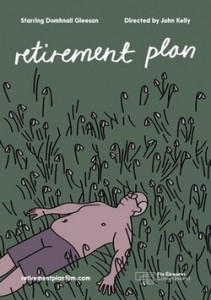 | Retirement Plan by John Kelly Winner of both the Jury and Audience Awards at SXSW, as well as Best of Fest at the Palm Springs ShortFest, Retirement Plan won five qualifying awards – making it the film with the most in its category. Its festival pedigree is a testament to how emotionally effective the film is. Simple in both style and narrative, the film’s poignancy comes from the universality of its story, enhanced by its stripped-down visual approach. |
***
The Academy Award for Best Documentary Short Film
It’s a good thing I checked and re-read last year’s version of this article, because I almost wrote the same blurb twice. Last year, I called Doc the “new crisis category,” and my impression this year is similar. Live Action—a couple of embarrassments aside—has gotten its act together and delivered strong contenders. The animation shortlist is one of the best in recent memory. But documentary…well, it’s gone stale.
Of the three shortlists, this has the lowest ratio of films we would accept to S/W. Perhaps it is conceited to center our POV, but the Doc community itself has talked nonstop for a couple of years about being in crisis. There has been a collapse in the acquisition market, and an associated sense that the golden age we are now exiting skewed incentives towards commercial formats so much that it stultified the medium artistically.
At S/W, we think that the relatively low stakes of short filmmaking mean that artists have a responsibility toward risk-taking and experimentation. It feels like Documentary as a whole could benefit from embracing the sort of renewal this promises, but a couple of examples aside, the 15 films here feel trapped in filmmaking lanes that were defined in the 90s and 2000s. None of the films are “bad” in the way that some of the live action selections can be, but there is a formulaic quality that I would challenge The Academy to move beyond. – Jason Sondhi
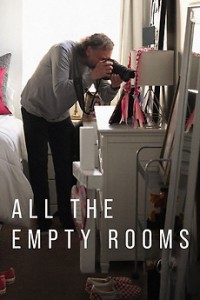 | All the Empty Rooms by Josh Seftel I don’t really want Netflix to win. In my mind, they are a major contributor to the commercialization of this category, and that’s before the current apprehension surrounding the acquisition of Warner Bros. But they might just have the favorite in this category again. Seftel understands the inherent power of the photo project that Hartman and Bopp have begun and trusts in simplicity and spareness, seeking to accentuate its power rather than engineer it. This is admirable restraint, creating a complementarity that is understated and thematically correct. Watch the film (Netflix) |
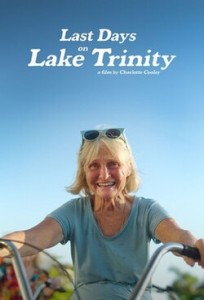 | Last Days on Lake Trinity by Charlotte Cooley A solid premise and commendable commitment over time from its director are the foundational elements for this short about aging Florida trailer park residents kicked off the land by an expanding megachurch. But, what makes the film sing are its characters, as two of the three spotlighted subjects rank highly as the most memorable “performances” in all of Short Documentary this year. |
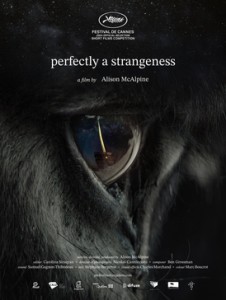 | perfectly a strangeness by Alison McAlpine This is the sort of outside-the-box selection I would like the Academy to increasingly recognize, but, truthfully, how many Alison McAlpines are there out there? A wordless video essay that follows three donkeys touring an abandoned space observatory sounds rough, but if you have an aesthetic appreciation for photography, the images here are so high-level that they alone can easily maintain your interest. Then, while the film’s themes are not spoonfed, their opaqueness is somehow not frustrating. Instead, the imagery is so evocative that they feel inviting—playfully welcoming you to construct your own meaning. |
 | The Devil is Busy by Geeta Gandbhir & Christalyn Hampton I confess that I struggled to reach five selections, with The Devil is Busy eventually claiming the last spot. While I don’t find it terribly original, I do have great admiration for how excellently it is crafted. The day in the life of an abortion clinic is thematically contained, insightful, and frequently moving. Gandbhir’s experienced hand as co-director is welcome ballast for Hampton’s assured directing debut. |
 | We Were the Scenery by Christopher Radcliff I went deeper into what I admire about Radcliff’s film in our featured review, but what I feel to be misunderstood is that, unique hook aside, the film is not really a “takedown” of Coppola or Apocalypse Now. The subjects are prompted to and repeatedly demur. Instead, the film is something of a matryoshka that utilizes its hypnotic approach to probe and suggest themes that are too enormous to grasp. As you open up one level, another reveals itself underneath, and if there is no clarity or revelation, something recognizable and human begins to form in the complex accumulation. |
***
The Academy Award for Best Live-Action Short Film
As is often the case within the live-action category, the 15 shortlisted films engage with a wide spectrum of contemporary issues – ranging from school shootings and sexuality to war – with varying degrees of success. The most accomplished shorts on this year’s list, however, are those that adopt more original and distinctive approaches, delivering their impact with greater nuance and restraint.
It’s been two years now since we described the Academy’s shortlist for Best Live-Action Short Film as a “mess” and “embarrassing”, and while this year’s selection does not quite descend to those same depths, a substantial portion of the films once again prompts questions about the selection process and the judgement of those responsible. However, as was the case last year, there are clear signs of improvement, and identifying the five films we would advance to the nominations stage proved far more straightforward than it would have been only a few years ago.
The five films highlighted below stand out as our clear favourites from the 15-film shortlist. We can only hope that the voting body shares our opinions and ultimately makes selections that accurately reflect the current landscape of short filmmaking. – Rob Munday
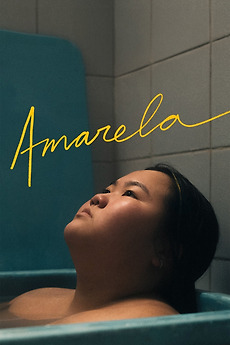 | Amarela by André Hayato Saito Blending elements of the character study with those of the sports film, Amarela impresses by offering a deeply universal portrait of a young girl grappling with questions of identity within a highly specific context. While football fans will appreciate the references to icons such as Zidane and Ronaldo (R9), the true centre of the film is Melissa Uehara, whose commanding central performance carries the emotional weight of the narrative with remarkable strength and nuance. |
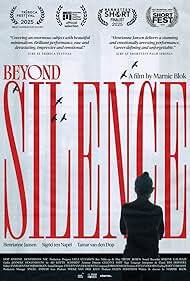 | Beyond Silence by Marnie Blok Since the #MeToo movement, stories of sexual harassment and abuse have become increasingly common in short films, challenging filmmakers to find fresh ways to approach the subject. In Beyond Silence, actor-turned-director Marnie Blok follows a deaf PhD student seeking help to report ongoing harassment by her supervisor. While the film’s character-driven dramatic approach is not especially novel, it distinguishes itself through what it leaves unsaid, gradually shifting focus to suggest shared or unresolved trauma. For voters seeking films that deliver a resonant and lasting emotional impact, Blok’s work is difficult to overlook. |
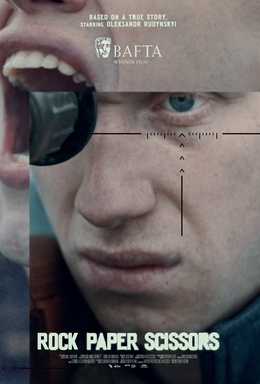 | Rock, Paper, Scissors by Franz Böhm War films are often difficult to produce convincingly, given the access and resources required to render conflict with authenticity. In his approach to the war in Ukraine, Franz Böhm narrows the focus to the story of a single young man and his efforts to assist his father in operating a makeshift frontline hospital. Already the recipient of a BAFTA for Best Short Film, this NFTS production refocuses attention on the ongoing conflict, delivering a portrayal marked by gripping tension and dramatic urgency. |
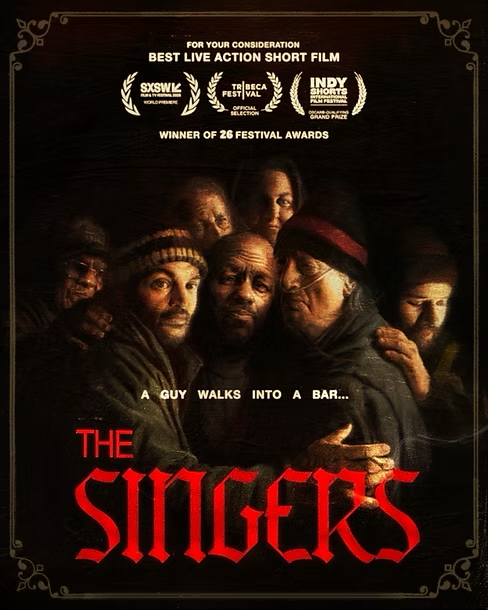 | The Singers by Sam Davis In a rare development for the live-action shortlist, one of the most accomplished and compelling films from the festival circuit has been included. A regular contributor to S/W as both a cinematographer and, more recently, a director, Sam Davis elevates his filmmaking to a new level with The Singers, a short film centred on an impromptu sing-off in a dive bar. Refreshingly original, consistently surprising, and deeply moving, the film confirms Davis’s long-evident talent; with The Singers, he has arguably produced one of the finest short films of recent years. |
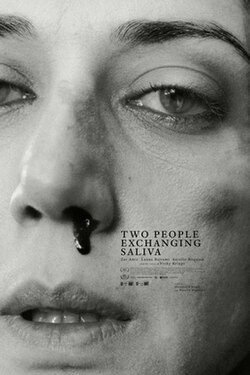 | Deux Personnes échangeant de la Salive (Two People Exchanging Saliva) by Natalie Musteata and Alexandre Singh Set in a world where kissing is punishable by death and slaps replace money as a form of currency, Two People Exchanging Saliva invites its audience into a reality that is as hauntingly beautiful as it is nightmarish. The short engages directly with contemporary themes – drawing inspiration from a couple sentenced to ten years in prison after posting a video of themselves dancing in front of Tehran’s Freedom Tower – yet it approaches its subject matter with such originality and restraint that it never feels tired, clichéd, or preachy. A singular and fully realised vision, the film is well deserving of inclusion on this list. |