 Guest
Guest
Over the years, we’ve published various pieces of editorial – film reviews, playlists and more – as a way of marking Indigenous Peoples’ Day. However, with no one on the S/W team ideally positioned to take responsibility for these posts, we decided to do things a little differently this year and ask for help. That help comes from today’s featured director, Sisa Quispe (URPI: Her Last Wish), a Quechua and Aymara filmmaker who I was lucky enough to meet at the 2026 Ouray International Film Festival, where she presented a selection of short films from Peru and other Andean cultures.
After spending time with Sisa, it quickly became clear that her knowledge and passion for Indigenous filmmaking was something I wanted to share with the S/W audience. So, with that in mind, we asked her to put together a collection of short films celebrating Indigenous Peoples’ Day, along with a few words about what these films mean to her. – Rob Munday, Managing Editor
***
For this Indigenous Peoples’ Day playlist, I wanted to bring together films directed by Indigenous filmmakers that reflect the many ways our identities are lived, questioned, and defined on our own terms. Across different genres and communities, these films explore family, land, humor, belonging, traditions, and, above all, ownership: ownership of our stories, our identities, our cultures, and the ways we choose to represent ourselves.
Several of the films speak to one another. Things You Know But Cannot Explain and Urpi: Her Last Wish both explore the process of recognizing our connection to our culture, family, and territories while embracing the complexity of who we are. There is also a sense of healing in that journey: a willingness to look beyond the identities or definitions that have been handed to us and to set out on our own quest to understand who we are for ourselves. In both films, identity is not something simple or fixed, but something we continue to question, understand, and make our own across time.
Waska: The Forest Is My Family and The Beguiling, although very different in tone and form, both confront cultural extractivism. They examine what happens when Indigenous culture, identity, land, knowledge, or even desire become something to be consumed, romanticized, appropriated, and taken by others. Waska approaches this through the exploitation of sacred plants, cultural appropriation, and the relationship between Indigenous peoples and the land, while The Beguiling uses satire and comedy to question fetishization and the appropriation of Indigenous identity.
At the same time, films like Pow! and Legend of Fry-Roti: Rise of the Dough remind us that Indigenous storytelling does not always need to center trauma. Humor, family dynamics, contemporary life, playfulness, and, more importantly, contradiction are equally important parts of our stories. I Am Home explores a different kind of duality: the idea that we can be modern, contemporary, and Indigenous at the same time. Our identities are not frozen in the past, and our connection to the land, to traditions, and to where we come from can transcend the narrow definitions others place on us. Through the Storm highlights the importance of community and the impact of leadership in our communities, showing how the support, guidance, and example we offer can shape the lives of younger generations.
Together, these films resist the idea that there is one way to be Indigenous or one kind of Indigenous story. They explore the ancestral and the present, seriousness and humor, tradition and change. As an Indigenous filmmaker, I wanted this playlist to highlight Indigenous people not simply as romanticized subjects of stories, but as authors of them: defining ourselves, representing our communities, and telling our stories on our own terms. – Sisa Quispe
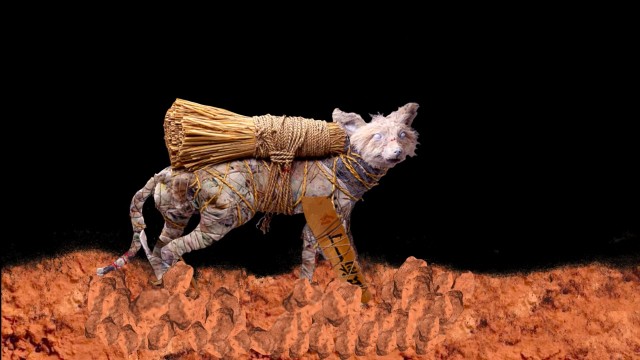
Things You Know But Cannot Explain by Michelle Hernandez and Chantal Jung
Using art from Wiyot artist Rick Bartow, this stop-motion short explores one individual reclaiming their identity and culture as an Indigenous person, one that was long asleep waiting for the right moment to wake itself back up within themselves.
Urpi: Her Last Wish by Sisa Quispe
A young Peruvian-American travels to the Sacred Valley of the Incas to fulfill a promise to her grandmother. There, she meets a young Quechua man who offers her a motorcycle ride that challenges her understanding of identity.
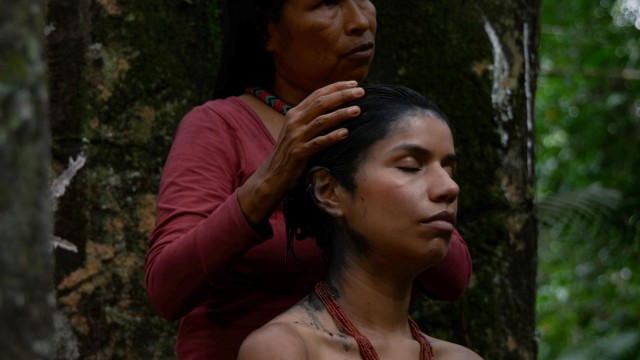
Waska: The Forest Is My Family by Nina Gualinga, Boloh Miranda, Elizabeth Swanson
Nina Gualinga of the Kichwa People of Sarayaku speaks with the memory of her Apayaya (grandfather) about the ongoing cultural appropriation, environmental destruction, and marginalization of Indigenous Peoples, questioning our very relationship to earth and the quest for healing.
The Beguiling by ishkwaazhe Shane McSauby
What seems to be a burgeoning romance between two Indigenous people takes an unexpected turn in this bold and thrilling blend of the satirical and the sinister by writer-director ishkwaazhe Shane McSauby.
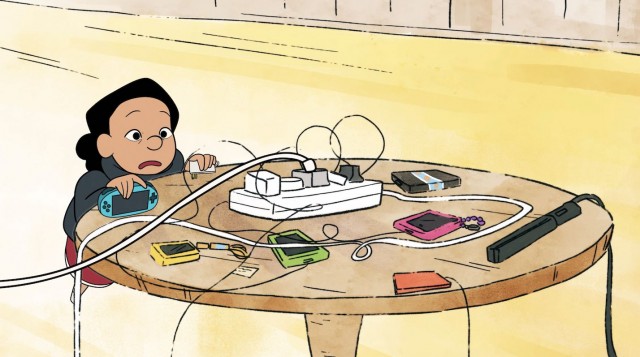
Pow! by Joey Clift
A Native American kid scrambles to charge his dying video game console at a bustling intertribal powwow.
Legend of Fry-Roti: Rise of the Dough by Sabrina Saleha
A Navajo/Bengali niece kneads to find dough-mestic harmony when her aunties burst into a frybread vs. roti showdown.
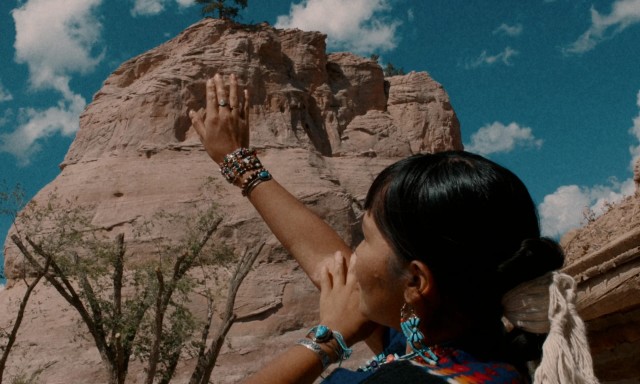
I am Home by Kymon Greyhorse
We adapt and change as time moves on and the world around us shifts. Even though we might look different, deep down we are still the same. We all are made from Mother Earth – mud, wood, love, and patience.
Through the Storm by Fritz Bitsoie & Charles Frank
Despite dwindling interest and a two-decade-long losing record, a determined coach and group of young athletes fight to keep their football program alive. An exploration in overcoming loss, the film follows the personal triumphs and hardships of the players and their families, and how football serves as a symbol of hope, unity, and resilience for the people of Red Lake.
***
If you’ve got an idea for a guest post you’d like to write for Short of the Week – feel free to reach out: editors@shortoftheweek.com