 Jason Sondhi
A new academic study making the rounds—from researchers at the University of California, Santa Barbara, and covered everywhere from The Hollywood Reporter and Animation Magazine, to Medical Xpress, has found that viewing artistically curated short films can causally boost creative thinking.
This is, of course, incredibly validating to us at Short of the Week, especially when we dug in deeper and learned the study sourced its artistic short films from our site!
We wanted to know more, so we reached out to the study’s co-author, Madeleine Gross. What inspired the study and their use of our curation? Turns out, they needed to answer a deceptively tricky question: what actually counts as art in an experiment about creativity? Their solution was both practical and—if we may—flattering:
“One of the biggest challenges in studying the psychological effects of art is defining what counts as art in the first place. We approached this by sourcing the films for our research from Short of the Week, a platform that uses a panel of industry professionals to curate films based on their artistic merit. This gave us a principled boundary between art and ‘non-art’… These promising early findings represent the strongest experimental test to date that art doesn’t just correlate with creativity — it causes it!”
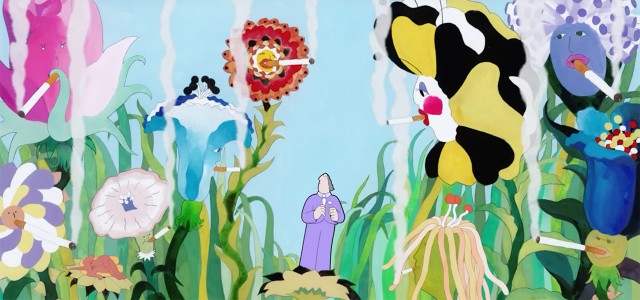
Still from Au Revoir Jerome, one of the films included in the study: Full Playlist
In the study, participants were split into groups and shown either a playlist of curated short films (yes, Gross provided their list for us to share!) or a control group of amateur “blooper reel” videos. The latter produced slightly more immediate joy—no surprise there—but the former led to significantly higher scores in tests measuring open-ended, flexible, and original thinking.
The conclusion to be drawn is probably not a surprise to any of you who have found your attention trapped in the algorithmic vice grip of Big Tech—TikTok may lift your short-term mood, but short films might actually expand your mind.
The playlist itself is not very long—five animated works that are, roughly, 7 minutes apiece, from contemporary artists like Lizzy Hobbs and Zohar Dvir. But, within that constraint, the team selected formally inventive, emotionally nuanced works that resist easy categorization and reward attention. That friction, the study suggests, is the point. When a film asks more of you due to the need for interpretation, ambiguity, and emotional attunement, it seems to exercise the same mental muscles that underpin creative thought.
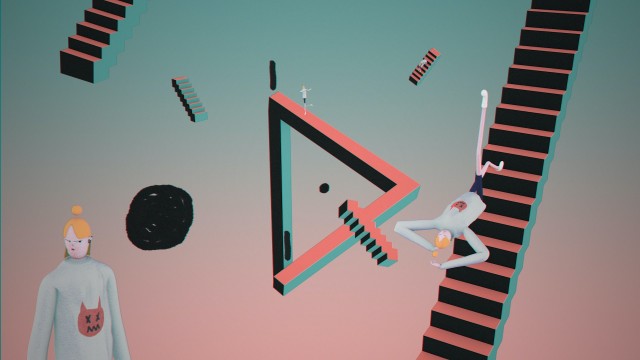
Still from Mercury’s Retrograde by Zohar Dvir. Full Playlist
Does that sound familiar? I hope so; that’s kind of the thesis of the Short of the Week project—that short films aren’t just a format but a space for risk and invention, benefiting storytelling and visual culture at large. What this study offers is empirical backing for something that, I think, our fellow programmers, filmmakers, and audiences have long felt intuitively.
So yes, we’re proud to have been part of the research. But more than that, we’re excited by what it implies. Not just that short films matter, but that engaging with them might leave you—subtly, cumulatively—thinking differently.
Cheers to Madeleine Gross, her co-lead Jonathan Schooler, and the rest of their team. They’ve teased us that a new study (which also sources films from our curation) is in the works. In the meantime, consider this your friendly nudge to stop rewarding slop and elevate the inputs of your free time. Do it for the culture, do it for your brain!