
 Rob Munday
Tackling themes of class and race, Darshika Karunahara’s impactful short film Takeaway explores enduring social dynamics in a way that feels both fresh and quietly confrontational. The kind of short that immediately commands attention, driven by compelling performances, sharp editing, and a rhythmic, mesmerising score, it serves as a strong reminder of how short films can interrogate big ideas just as effectively as any feature-length production.
Takeaway follows delivery driver Sheena as she transports food from her parents’ restaurant to a couple living in a wealthy neighbourhood. When she discovers that the food has leaked during the journey, the homeowner, Pernille, invites her inside to wash her hands. What initially seems like a simple act of politeness quickly becomes more layered when Sheena realises that Pernille is dating Calvin – her childhood friend. The chance reunion begins warmly enough, grounded in nostalgia and a shared past, but that sense of familiarity gradually reveals deeper tensions beneath the surface.
As Sheena observes the surroundings – including the abundance of African masks decorating the home – and begins to speak about family and belonging, the atmosphere subtly shifts. Conversations that appear casual at first start to carry sharper implications and the dynamic between the three characters becomes increasingly unstable. From this point onward, the film operates almost like a pressure chamber. Sheena inserts herself into the dinner as a deliberate third wheel, unsettling the balance between Calvin and Pernille, motivated by the suspicion that the relationship – and the cultural dynamics underpinning it – are more complicated than they initially appear.
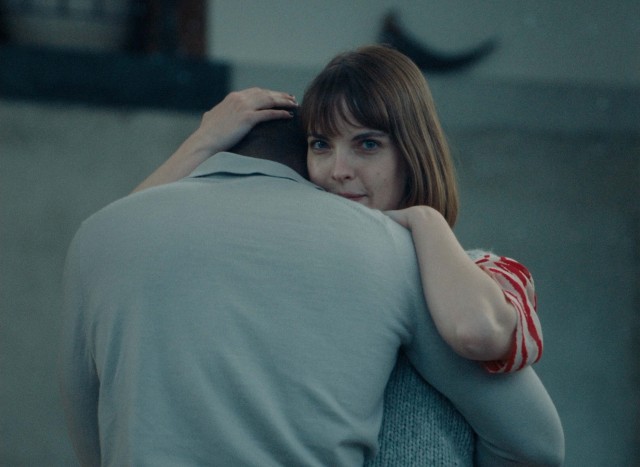
Christopher Nallo (L) and Luise Skov star as Calvin and Pernille
Written by Karunahara alongside Adrian Kirk Ejsing, Takeaway is impressively controlled in its pacing. The narrative steadily increases tension without ever feeling rushed, allowing small gestures, glances, and tonal shifts to accumulate meaning. Much of this effectiveness comes from the central performances. Diêm Camille (Sheena), Christopher Nallo (Calvin), and Luise Skov (Pernille) all deliver nuanced portrayals that capture the evolving emotional dynamics between the trio. Their interactions feel authentic and volatile at the same time, suggesting histories and tensions that extend beyond what the script explicitly states.
As the film approaches its climax, Karunahara makes a particularly effective creative choice by resisting the temptation to escalate into a loud or overt confrontation. Instead, the resolution is shaped through restraint. The final moment – in which Pernille finds herself on the outside looking in – carries a lingering emotional weight that arguably resonates more deeply than a direct argument would have. It’s a subtle but confident example of how directors withholding can often be more powerful than showing everything outright.
Having watched Takeaway multiple times while writing this article, the film continues to reveal additional layers with each viewing. If short films truly function as a space where the industry identifies emerging talent, then this production offers plenty of names worth paying attention to. From Sylvester Stjernholm Riisberg’s cinematography to Timo Dziallas’ edit and Jesper Ankarfeldt’s (Strandet) score, every department appears to be working in perfect cinematic harmony.