
 Mariana Rekka
I’ve always lived a little sideways in my own mind, constantly meandering and drifting, carried from one thought to the next by the smallest spark. I never really stopped to think how everyone else’s mind worked. But Miguel Rodrick did. And in No Vacancy, he created a short that captures that state with startling honesty. A that film immerses you in the raw, unfiltered way a mind moves when it’s left to its own devices.
From the first frames, the film hums with that restless mental rhythm – images slipping into one another, mutating, colliding without any warning. Aesthetically, it’s a beautifully disorienting swirl: messy, sometimes blurry, always wonderfully subjective shots that feel like perception dissolving into memory. It’s the kind of cinematic language that doesn’t care to explain a thought – it simply embodies it.
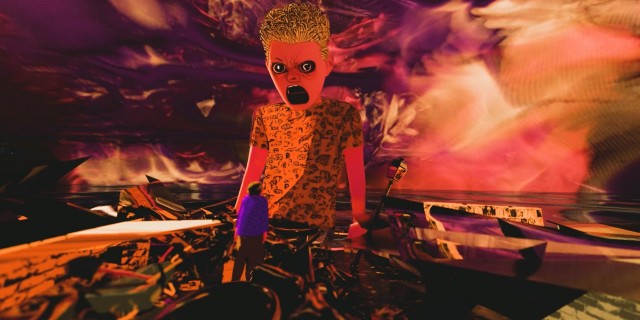
“I wanted to make a film that felt like looking directly into someone’s mind.” – Rodrick on his aims for his short.
Watching it, I felt seen. My mind can leap from a grounded idea into a completely different universe with barely any provocation – a stray noise, a flicker of light, a fly passing by. And in an era of relentless device-induced overstimulation, those leaps grow more extreme. No Vacancy understands that drift intimately- it doesn’t judge it, it just invites you to come along for the ride.
Rodrick built the short from a lifelong curiosity about how thought actually unfolds – not what people think, but how their minds move. His premise was simple: if you could plug a device directly into someone’s head and watch their inner world play out in real time, what would you see? Using his own mind as the starting point was the most honest approach, and his hope – quiet but palpable – is that others might recognize themselves in that chaos and feel the flicker of self-reflection.
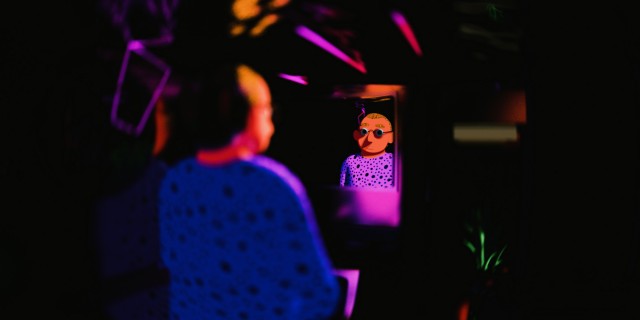
“Since I was young, I’ve been deeply curious about how similar or different other people’s mental processes are compared to mine” – Rodrick on the spark that ignited the creation of No Vacancy
From a technically point of view, the film is built in traditional 3D with a handful of 2D backgrounds. The team says they experimented with AI, but only some glitchy traces remain of that experimentation, remnants that look almost like digital hallucinations flickering at the edges of consciousness. The progress inside the story is completely fluid as none of the craft draws attention to itself; it all serves the sensation of inhabiting a mind in motion.
At its core, No Vacancy isn’t about visuals or technique – it’s about the strange experience of navigating your own inner landscape. Because at the end of the day, aren’t we all wandering inside our own heads, trying to make sense of the noise?
I felt strangely relieved by that recognition – surfing the short like a sea of ideas, too real to ignore. Maybe you will too.