 Rob Munday
Parenthood is something many of us tend to take for granted. I stumbled into fatherhood somewhat by accident, and only later came to appreciate the profound and often difficult journey so many undertake to have children. Child birth can be one of life’s most joyous moments – but for some, it can also be an experience marked by heartbreak and loss. Guiding families through these moments are midwives, whose work and emotional resilience often go unseen. That’s why films like Ben Lankester’s DELIVERY are so vital, as they pull back the curtain on this world offering important insight.
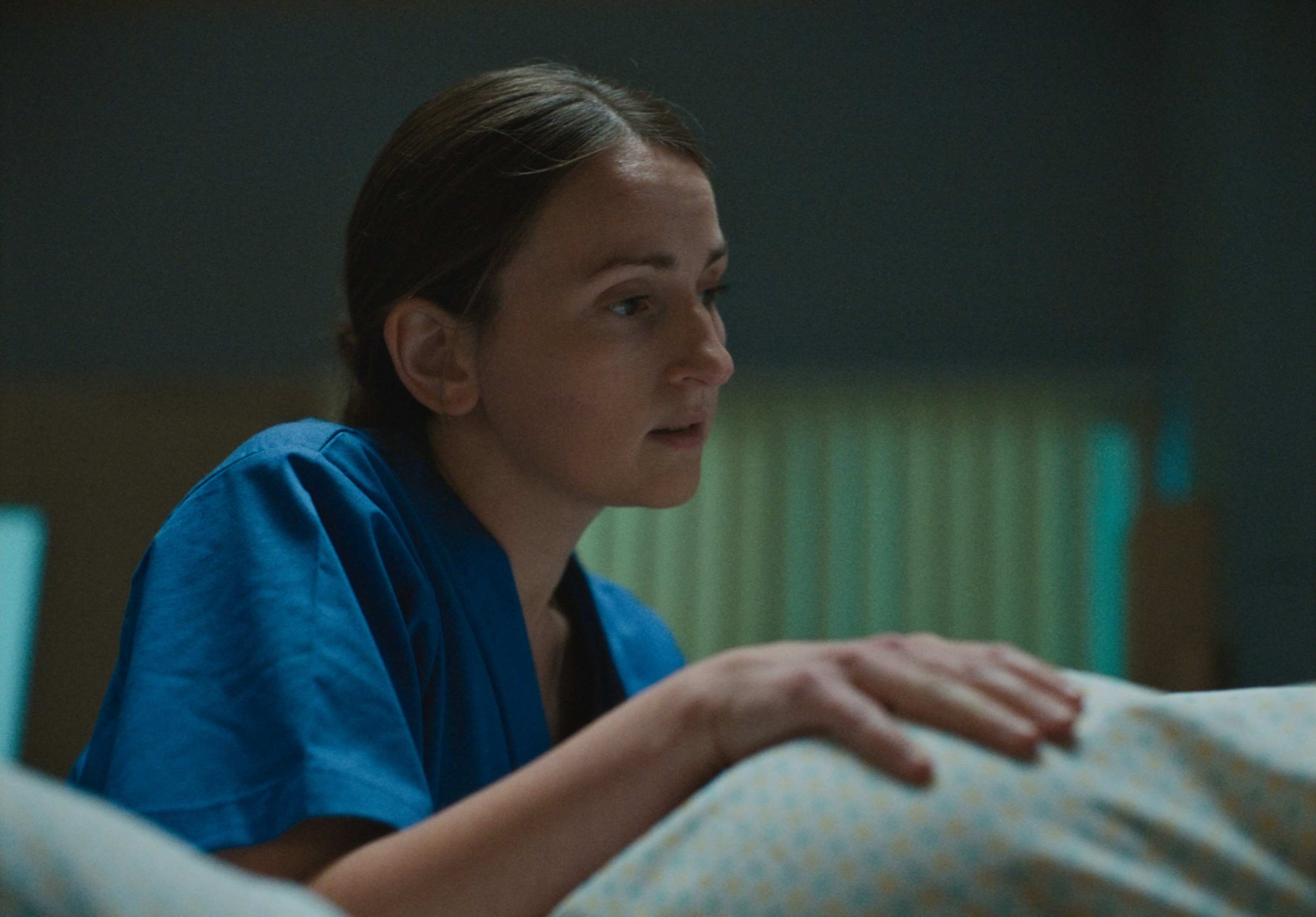
Transporting viewers into the high-stakes environment of a maternity ward, DELIVERY follows midwife Mary – portrayed by real-life midwife Rosie Chappel – through a challenging night shift as she navigates the exhausting highs and lows of her role. Having first worked with Chappel on a fundraising commercial for UK pregnancy charity Tommy, months later the idea for DELIVERY struck Lankester following the “challenging but ultimately successful” birth of his first child – with producer Bophanie Lun.
“How much of ourselves we can give to these roles?”
Over the following year, the three of them developed the narrative “via countless Zoom calls, text messages, Google Docs and voice notes,” drawing heavily on Chappel’s lived experience to craft an authentic story full of tension, heartbreak, camaraderie, and quiet reflection. With the goal of fostering empathy for their stressed protagonist, they concentrated their story on the physical and psychological demands placed on Mary. “DELIVERY seeks to encourage discussion on how much of ourselves we can give to these roles and how sustainable these sacrifices can be in the long term,” the pair explain, highlighting the central aim of their film.
Aiming for authenticity and immersion, Lankester and his team developed a shooting approach in which every scene was captured with a single camera in one continuous take. This method not only heightened the tension in each moment, placing viewers directly alongside Mary as she attended to her patients, but also reinforced the film’s intimate perspective. “The approach to camera direction was always to create as strong a first-person perspective as possible, from the narrow aspect ratio to the tight framing of Mary in each scene,” Lankester explains. “The handheld camera was crucial to keeping things as authentic as possible, really creating that feeling of being inside the room with the protagonist.”
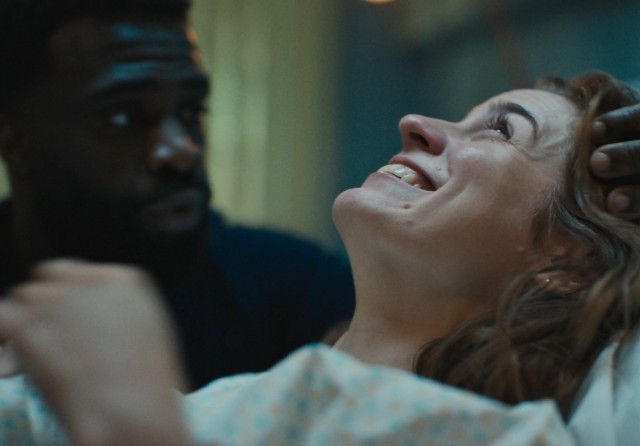
Jordan Kouamé (L) and Emily Laing star as a young couple expecting their first child.
This “near-documentary style” was also instrumental in helping Chappel – who lacks traditional acting experience – settle into her role alongside more seasoned cast members. Drawing on her own experiences on the maternity ward, Chappel ensures that Mary remains a complex and relatable character throughout. Yet while Chappel commands the lead role, the supporting cast is equally vital in expanding the film’s world beyond Mary’s immediate perspective. Jordan Kouamé and Emily Laing in particular, stand out as a couple grappling with both the anticipation and despair of their situation.
Although DELIVERY has universal appeal, producer Lun hopes their short continues to shine a light on what she describes as “a crucial time for the NHS”. She explains: “In 2024, the UK birth trauma enquiry reported that approximately 1 in 3 women experience traumatic births and 30,000 women per year develop PTSD as a result. There are also 13 stillbirths a day in the UK, an outcome DELIVERY dramatises to represent this staggering statistic.