
 Irina Wirjan
Gossip is a tricky thing. We all know it’s hurtful, yet it often feels like harmless fun – as long as the person in question never finds out. One of my friends will literally scan a room before saying anything remotely unkind, paranoid that someone might be within eavesdropping distance. I used to think this was excessive, but Corey Sherman’s Don’t Get Me Wrong shows why it may be a good habit.
The film presents a simple thought experiment: what would you do if you could hear every piece of gossip ever spoken about you? Its protagonist, Neil, discovers a mysterious television set that grants that exact power. Initially trying to move past the hurtful comments, he gets rid of the device, throwing it in the trash. But the irresistible, perverse allure of knowing the truth pulls him back.
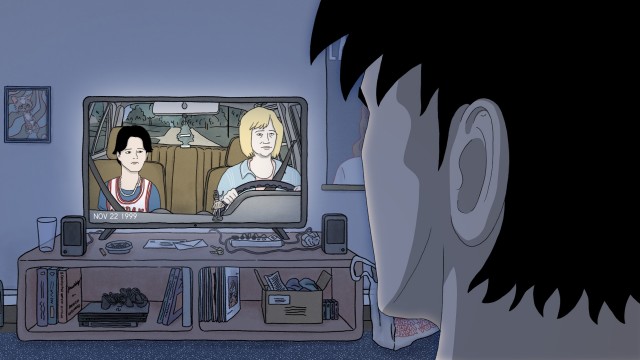
Neil becomes obsessed with this TV-like device that allows to hear all the bad things ever said about him.
Soon he’s binging years-old clips, growing resentful at seeing his friends, family, even his therapist saying mean and snarky things about him. When he sees two friends talking about him in real time, he snaps – calling them mid-conversation to confront them, driving them to apologize in shame for what they just said.
Sherman pushes the premise of Don’t Get Me Wrong into darker territory, revealing what happens when curiosity turns into obsession. Vindicated by his new omniscience, Neil transforms his social circle into a miniature surveillance state, policing every whispered remark. The final image – Neil, bloated and grotesque – makes it clear: the ugliness of gossip cuts both ways. In exposing the worst in others, he becomes that very same thing.
“Gossip is frowned upon, but it feels so natural and sometimes even necessary”
What makes the film especially sharp is the way it captures the dual anxiety of gossip: the guilt of spreading it and the paranoia of being its target. Neil begins as a sympathetic character, a slightly irritating but ultimately ordinary guy who is wounded by his friends. By the end, that hurt mutates into tyranny. As Sherman notes, “Gossip is frowned upon, but it feels so natural and sometimes even necessary. So, you can’t blame Neil’s friends for venting but you also can’t blame Neil for wanting to hear what they have to say.” The film thrives in that gray area, balancing humor and unease with precise social insight.
In a culture where snark is currency and we’re all overly attuned to how we’re perceived, Don’t Get Me Wrong is a reminder that obsessing over other people’s opinions can warp us just as easily as the gossip itself.