
 Jason Sondhi
It’s not controversial to say that America is a profoundly car-centric culture, and there are a lot of theories to describe why that is. Structuralist thinkers point to Detroit manufacturing, the building of the interstate highway system, and urban white flight, while more romantic thinkers frame America as a land defined by its frontier past and lionize its reverence for rugged individualism. Lefty urbanists decry this state of affairs and look longingly to the walkable neighborhoods of Europe. However, Europeans themselves have less black and white views on the issue—something I was reminded of this week while watching the excellent Swiss short, The Car That Came Back From the Sea, which is releasing later this month.
So yes, America is synonymous with cars, from Gatsby’s Rolls Royce to The Fast and the Furious franchise today, and for millions here, learning to drive is an iconic right of passage into adulthood. That was the case for today’s director, Charles Frank, who, growing up in a rural area, described getting his license as “the most profound symbol of freedom in my life.” Yet there has always been a singular exception to this rule—New York, America’s most iconic city, and the one place it is perfectly possible to never drive in. Despite being raised in the car culture of Southern California, I’ve lived in New York for 14 years and have yet to own a car here. I have elderly neighbors who have never driven in their lives!
Setting a short documentary in a driving school in New York is, therefore, an idea ripe with clear potential. Immediate and massive contrasts present themselves. First, the fact that it’s possible to never drive and is not necessarily expected of you, and yet NYC is one of the most famously aggressive and chaotic driving environments in the country. Then, there are all the inherent tensions of the city—the massive class divides, its racial and cultural diversity, that inexorably express themselves in an environment such as this. It’s a good setting for human drama, and yet, I don’t know if this film could be great without Shanti.
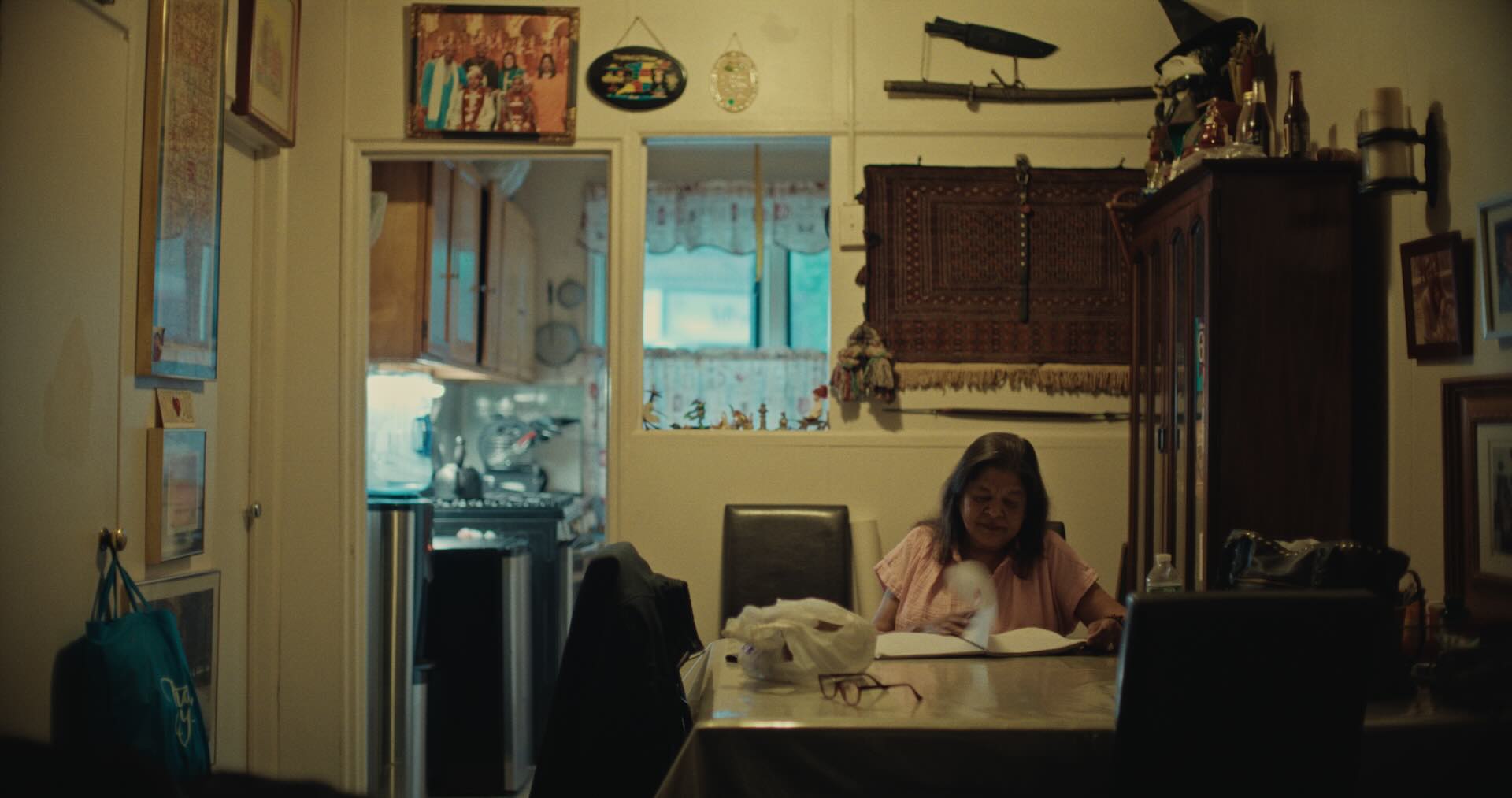
Shanti at home
Shanti Rides Shotgun mines enormous humor and drama from setting up inside a student driver’s car and letting the camera roll, but it shines as a profile documentary because Frank and his team found an extraordinary subject. Shanti Gooljar is famous as the driving instructor of choice for NYC’s elite offspring. An NyTimes article from the start of the year listed the children of Jerry Seinfeld, Rupert Murdoch, Vera Wang, and Katie Couric as her students. This status is interesting and provides necessary social proof that spices up the otherwise bland headline of “Guyanese immigrant provides driving lessons in New York”, yet Frank wisely does not lean too heavily on this aspect. I’ve long contended that profile documentaries have three essential aspects: the hook, the subject performance, and the filmmaking. Driving instructor to the elite is a satisfactory, but not stupendous, hook—what really drives the 8-minute film is Shanti’s performance.
Shanti is no-nonsense, foul-mouthed, and sardonic. These aspects in an elderly mother of two are surprising and gruffly charming in their own right. When directed at the scions of American power, however, the transgressive pleasure is sublime. Yet, Shanti is successful for a reason, and insulting her customers is not it. She is sneakily charismatic, and her gruffness is a cover for an abiding warmth and affection. The film ably contrasts Shanti’s demeanor with her students with quieter moments alone, and works through how the death of her husband in 2022 has only reinforced her purpose as a teacher.
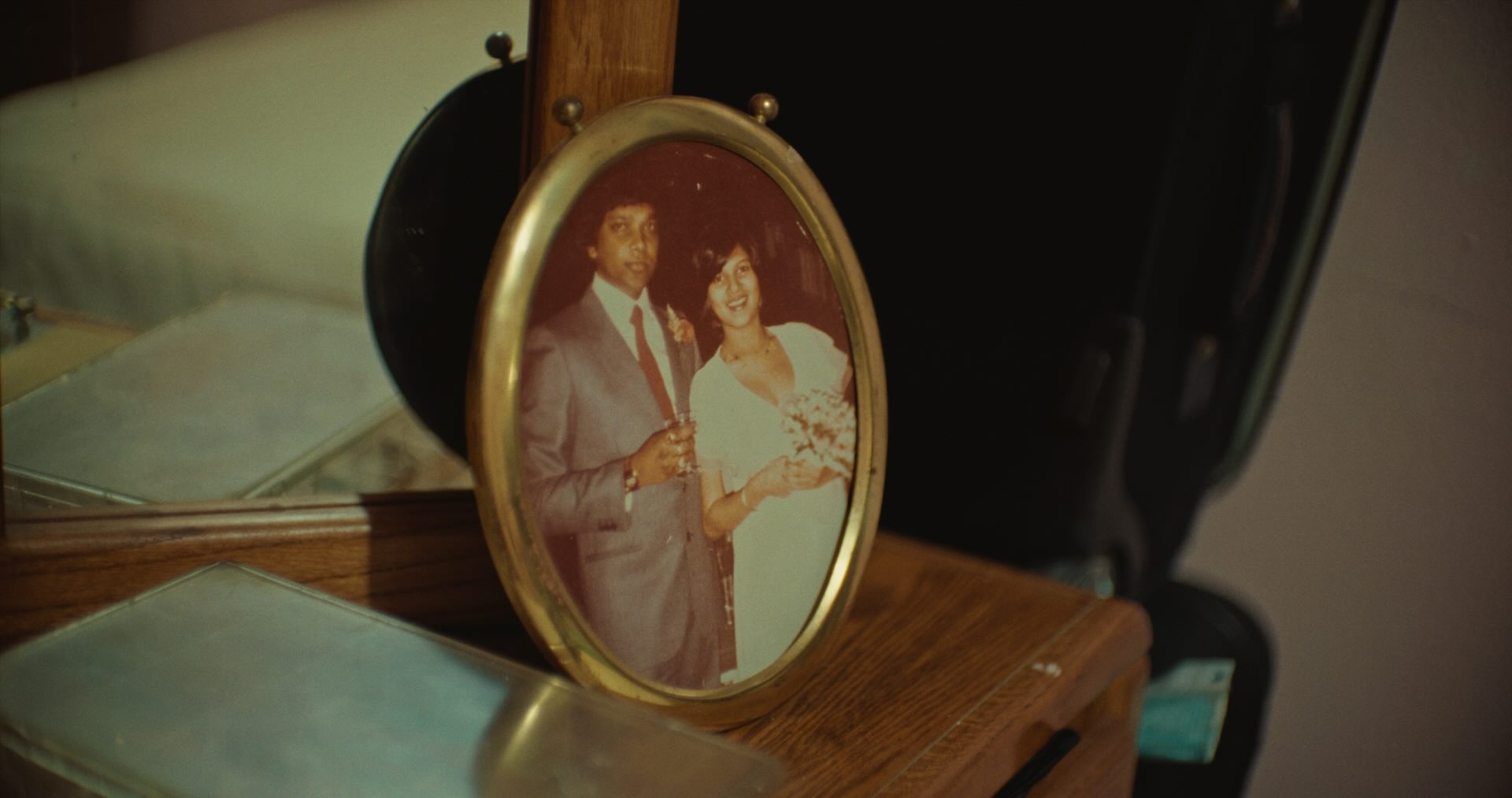
Shanti’s grief at the loss of her husband provides a moving counterbalance to the film’s humor
While Shanti is the draw, the filmmaking is up to the challenge as well. We’ve tracked Frank for near the entirety of his career, starting a decade ago with his short, Clint Smith: Beyond this Place. In the decade between these appearances on Short of the Week, he went viral with legendary Staff Pick, Junk Mail, co-founded the award-winning production company, Voyager, directed a debut feature, and has become a leading creator of brand documentaries, most recently with the Nike-sponsored short, Through The Storm, which racked up honors at brand and mainstream film festivals throughout 2024. Frank is a wizened elder of Documentary now, and while this film did not have an enormous budget, they make it count—Frank in particular credits the DP, Peter Pascucci, for coming up with a creative way to rig three cameras on Shanti’s car that could roll simultaneously, and his editor, Nico Frank, for the comedic contrast and kinetic energy of her cut.
Shanti Rides Shotgun qualified for Oscar consideration this summer and is riding a high coming into its online premiere this week. It recently nabbed the Grand Jury Prize at Los Angeles’ AFI Fest and secured a Critics’ Choice Documentary Award nomination. While profile docs are traditionally strong contenders at the Academy Awards (like the reigning winner), they are usually of an older, mid-length style, which was born out of TV broadcast expectations. Longer is not necessarily better, though! A fast-paced sub-10min profile that is destined to be most effective on the internet would be a really cool move for the awards body to consider, and I hope they go for it!