
 Rob Munday
As a father of two young boys, I’m fascinated by how their bond continues to grow over the years – especially as I reflect on the highs and lows of my own relationship with my brother. The sibling connection is a powerful one, and it’s said to be even more profound between twins – a dynamic that is beautifully and tenderly portrayed in Justine Martin’s moving short documentary Oasis.
An immersive observational documentary, Oasis places its audience in the company of 14-year-old twins Raphaël and Rémi as they spend their summer immersed in nature – catching frogs, playing in the water, and sleeping under the stars. Their bond is tender and deeply heartwarming to witness. Yet, beneath these carefree days, there’s a quiet sense that change is coming – though neither boy seems entirely certain what that might mean for them.
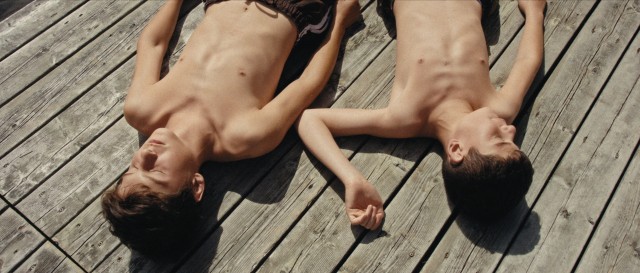
Spend a summer with brothers Raphaël and Rémi, before everything changes’
Despite the unique aspects of their situation – being twins, and with Raphaël living with a disability – Oasis is a profoundly relatable film for anyone who has children or siblings. Watching the way the boys navigate their relationship – Rémi’s quiet care and Raphaël’s heartfelt appreciation – offers a moving glimpse into a bond that’s both intimate and evolving. While we may not know exactly what’s going through their minds, the emotional undercurrents are unmistakable, and many of us will find ourselves deeply connected to their experience.
Watching so many short films on a regular basis, it’s easy to become a bit desensitised to the emotional beats so many of them strive to hit. Personally, I find nothing more off-putting than when those emotions feel forced or manipulative. That’s precisely what makes Oasis stand out. It’s a film that feels effortlessly authentic and deeply sincere. Martin invites us into the lives of these two brothers with such sensitivity, allowing us to feel present without ever feeling like we’re intruding.
This delicate balance between intimacy and distance is largely achieved through the film’s production choices. The camera often holds back, observing from afar – even during the interview segments – as if getting too close might risk disrupting the touching bond unfolding on screen. One of the most joyful scenes in the short unfolds in a simple, static shot of the boys playing cards. It’s a perfect example of how Oasis draws us in with restraint, remaining visually unobtrusive while still emotionally absorbing.
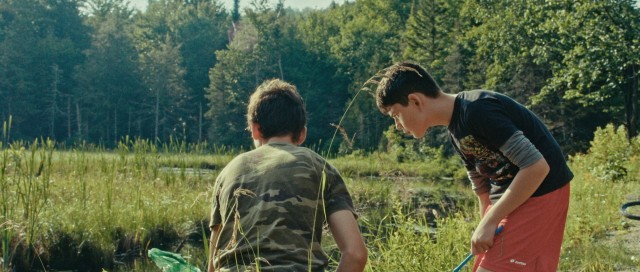
Location and nature plays an important role in capturing the dynamic between the brothers.
Sound design plays an equally important role. There’s minimal use of music – limited to brief opening credits and a beautifully rendered montage near the end. Instead, the natural ambient sounds and the boys’ casual conversations take centre stage, grounding the film in a rich sensory realism that enhances its emotional impact.
While Martin could have explored more of the boys’ lives beyond their summer adventures, that never feels like the film’s intent. Oasis isn’t aiming for a comprehensive portrait. Instead, it’s capturing a moment of connection in a bond that has developed for years – one that may never exist in quite the same way again. It’s a snapshot of innocence, curiosity, and brotherhood, brought to the screen with a quiet beauty. In a world that often feels chaotic and uncertain, Oasis is a much-needed reminder of gentleness, humanity, and the small wonders that still exist.